 IntoSlides
Presentation example
World War II: a five-slide presentation
IntoSlides made this deck from one topic: “World War II: causes, major events and how it ended, for a high school history class”. Below are all five slides with their text. Download the PowerPoint or make a presentation on your own topic.
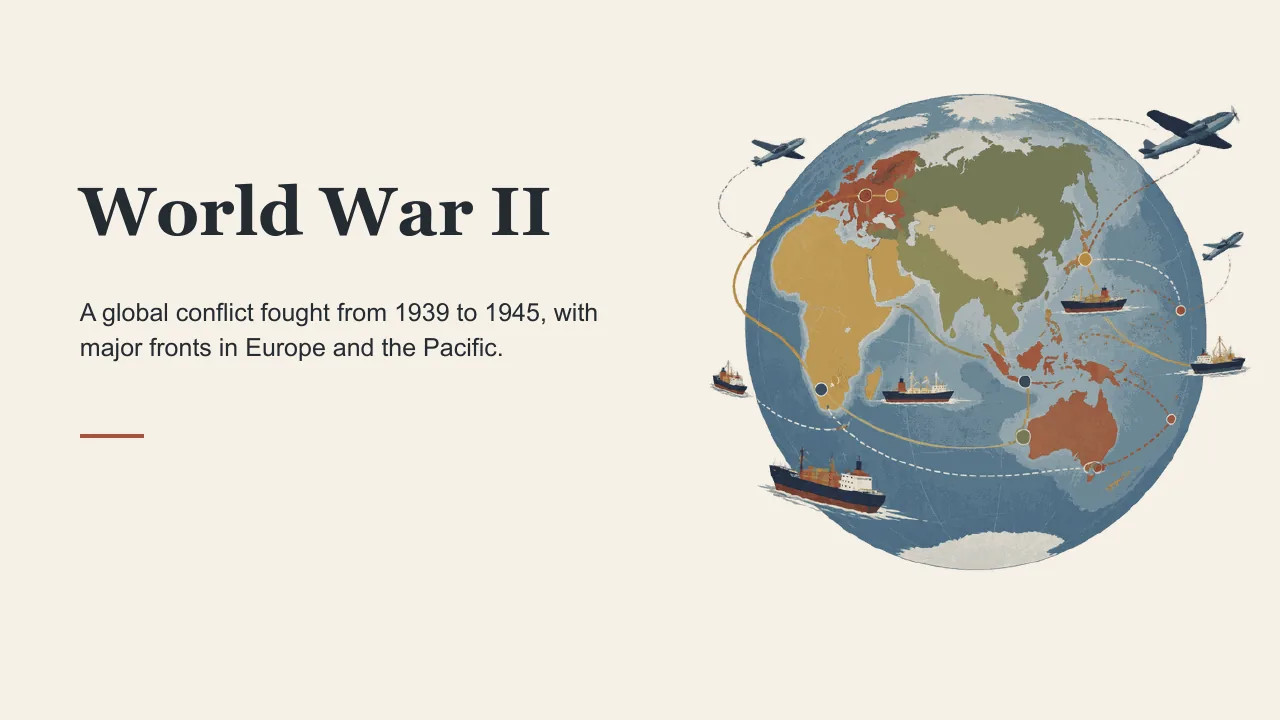
World War II
A global conflict fought from 1939 to 1945, with major fronts in Europe and the Pacific.
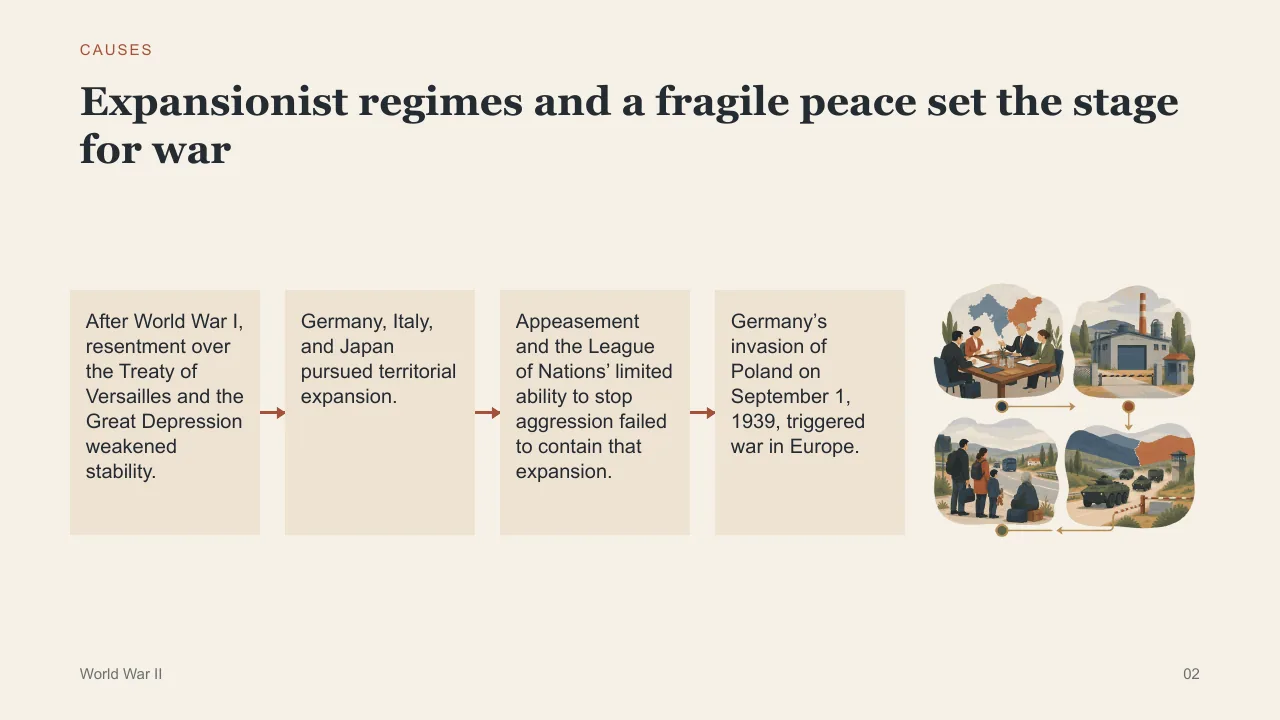
Expansionist regimes and a fragile peace set the stage for war
After World War I, resentment over the Treaty of Versailles and the Great Depression weakened stability.
Germany, Italy, and Japan pursued territorial expansion.
Appeasement and the League of Nations’ limited ability to stop aggression failed to contain that expansion.
Germany’s invasion of Poland on September 1, 1939, triggered war in Europe.
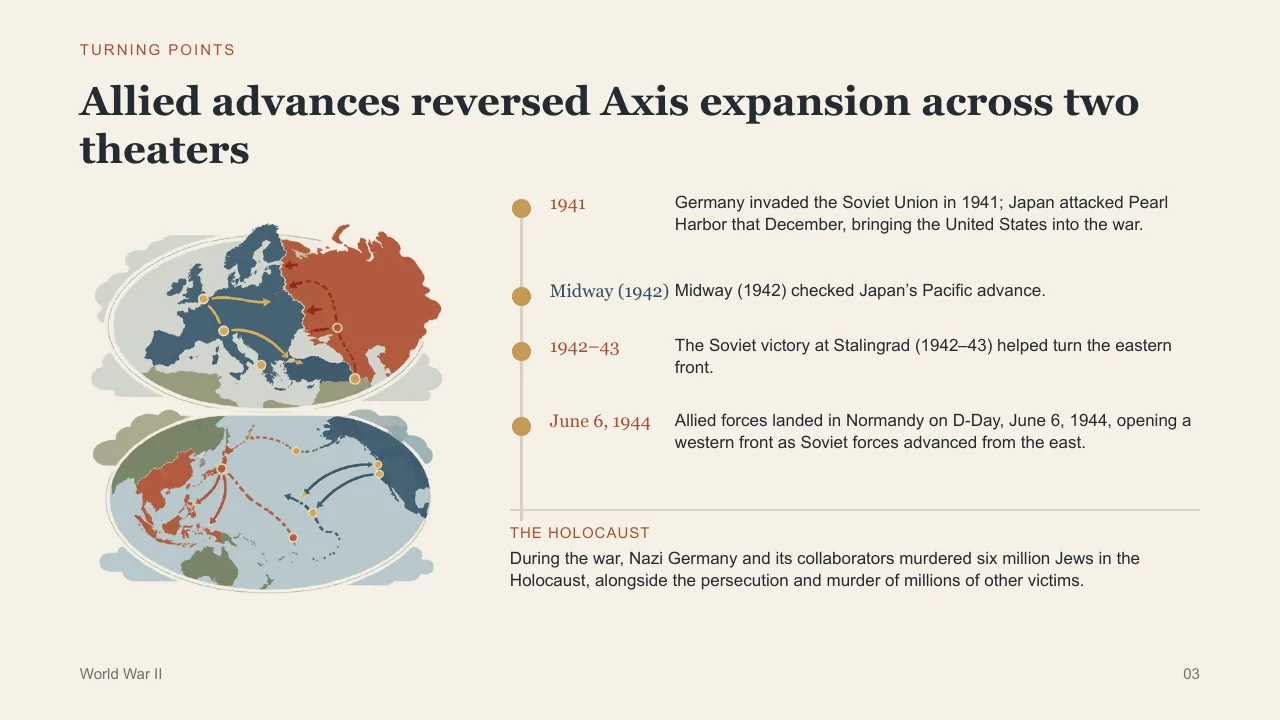
Allied advances reversed Axis expansion across two theaters
Germany invaded the Soviet Union in 1941; Japan attacked Pearl Harbor that December, bringing the United States into the war.
Midway (1942) checked Japan’s Pacific advance.
The Soviet victory at Stalingrad (1942–43) helped turn the eastern front.
Allied forces landed in Normandy on D-Day, June 6, 1944, opening a western front as Soviet forces advanced from the east.
During the war, Nazi Germany and its collaborators murdered six million Jews in the Holocaust, alongside the persecution and murder of millions of other victims.
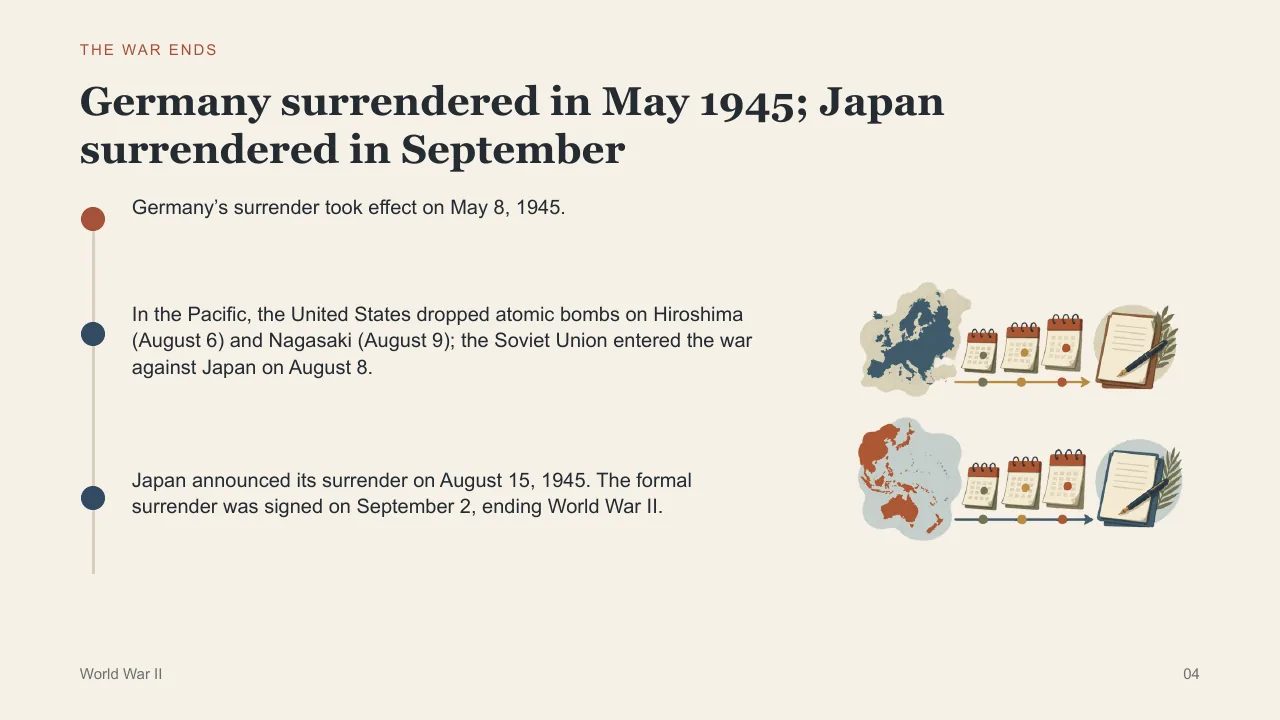
Germany surrendered in May 1945; Japan surrendered in September
Germany’s surrender took effect on May 8, 1945.
In the Pacific, the United States dropped atomic bombs on Hiroshima (August 6) and Nagasaki (August 9); the Soviet Union entered the war against Japan on August 8.
Japan announced its surrender on August 15, 1945. The formal surrender was signed on September 2, ending World War II.
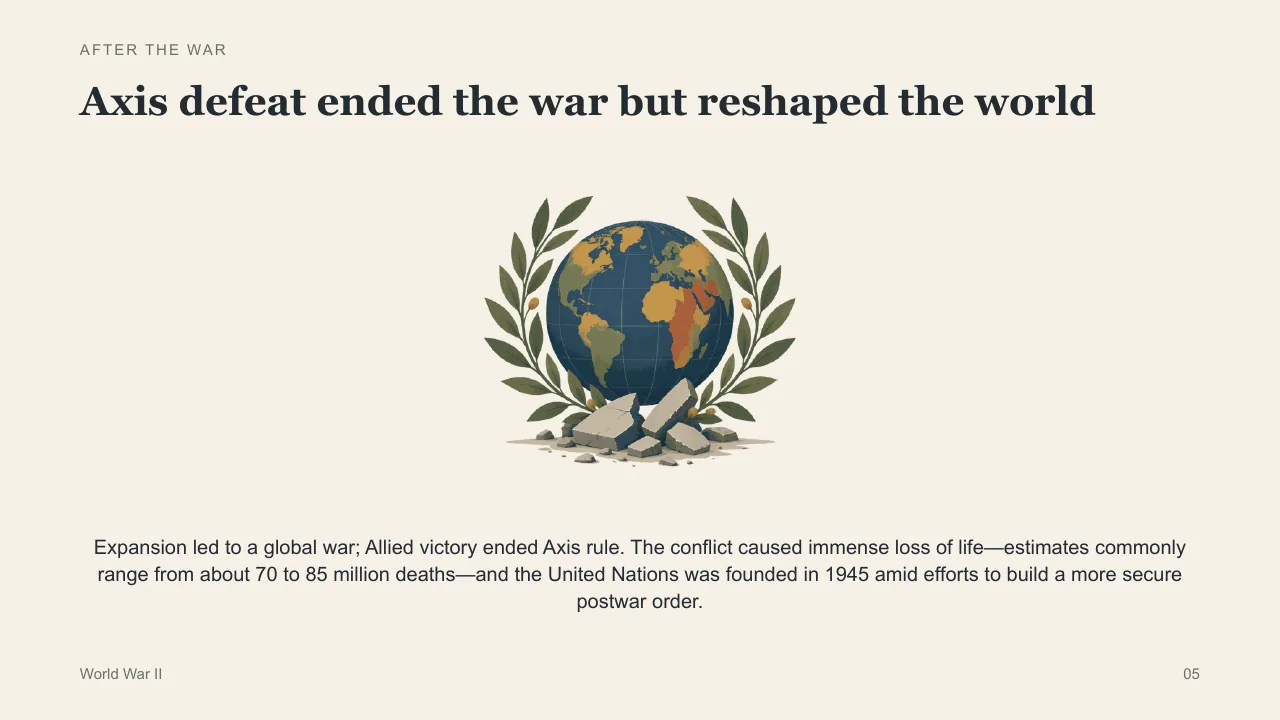
Axis defeat ended the war but reshaped the world
Expansion led to a global war; Allied victory ended Axis rule. The conflict caused immense loss of life—estimates commonly range from about 70 to 85 million deaths—and the United Nations was founded in 1945 amid efforts to build a more secure postwar order.
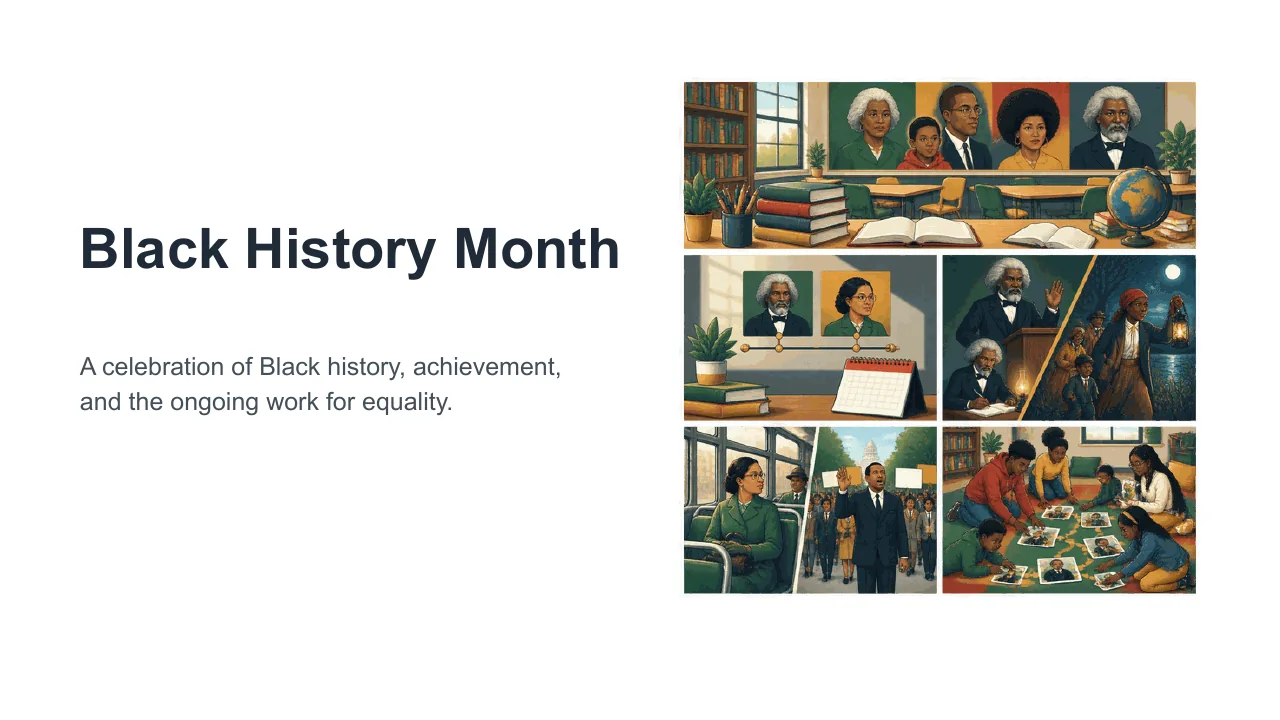 Black History Month
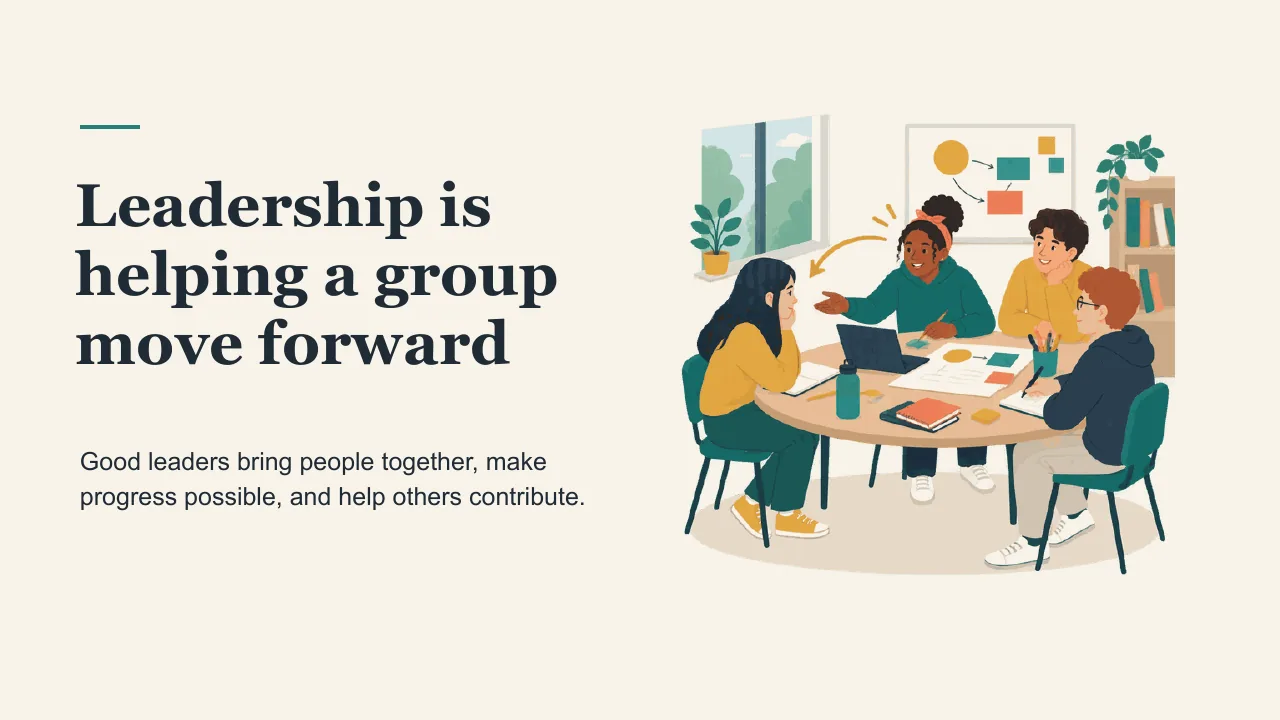 Leadership skills
 Choosing a career