 IntoSlides
Presentation example
Earthquakes: a five-slide presentation
IntoSlides made this deck from one topic: “Earthquakes: why the ground shakes and how people stay safe, for a middle school earth science class”. Below are all five slides with their text. Download the PowerPoint or make a presentation on your own topic.
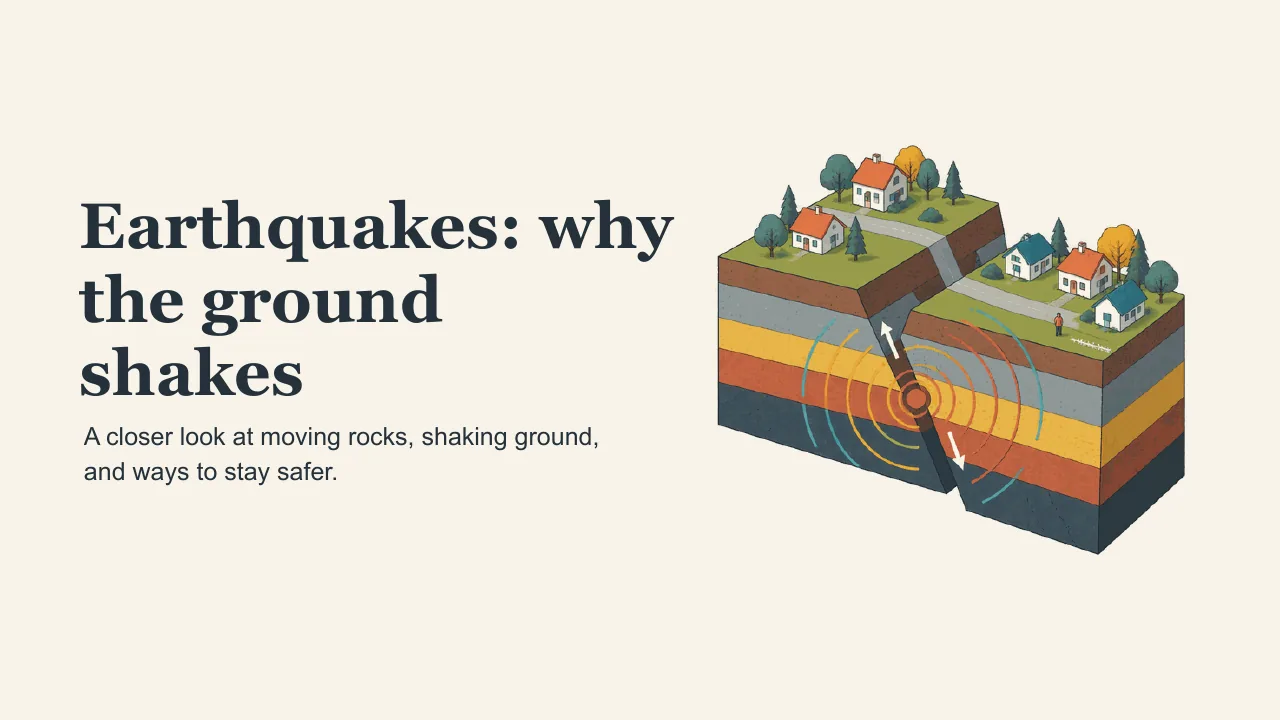
Earthquakes: why the ground shakes
A closer look at moving rocks, shaking ground, and ways to stay safer.
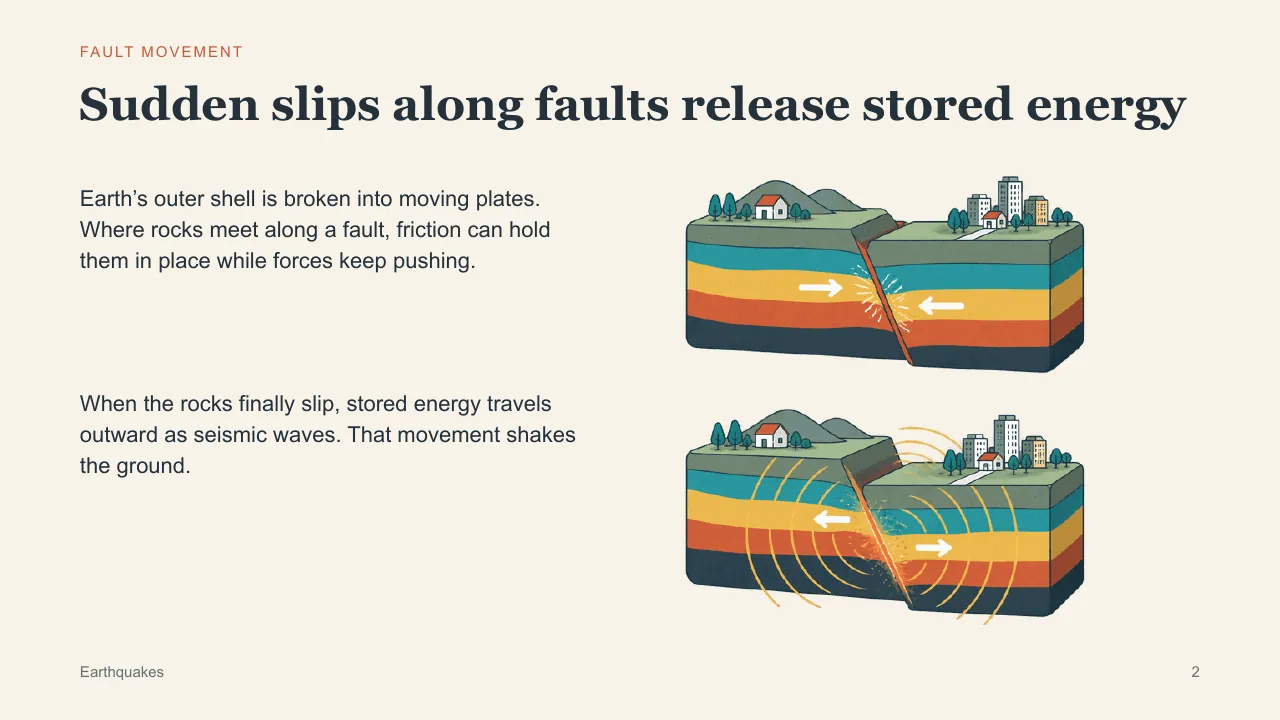
Sudden slips along faults release stored energy
Earth’s outer shell is broken into moving plates. Where rocks meet along a fault, friction can hold them in place while forces keep pushing.
When the rocks finally slip, stored energy travels outward as seismic waves. That movement shakes the ground.
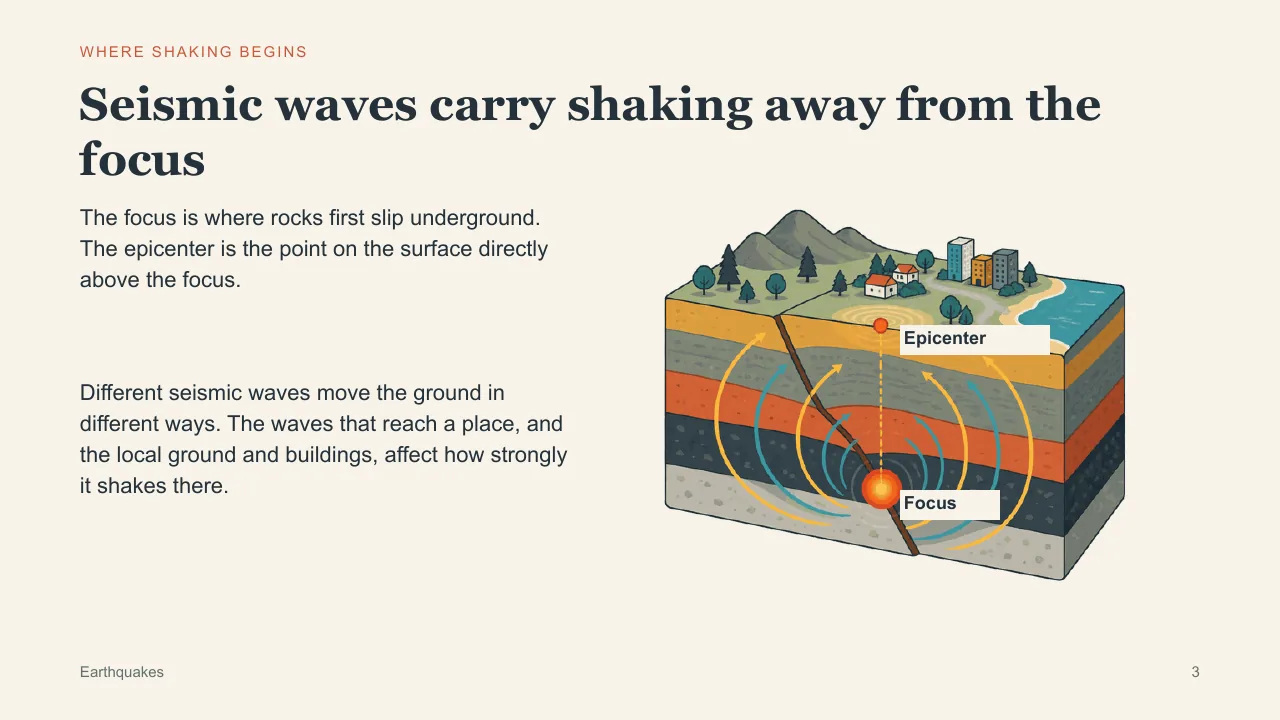
Seismic waves carry shaking away from the focus
The focus is where rocks first slip underground. The epicenter is the point on the surface directly above the focus.
Different seismic waves move the ground in different ways. The waves that reach a place, and the local ground and buildings, affect how strongly it shakes there.
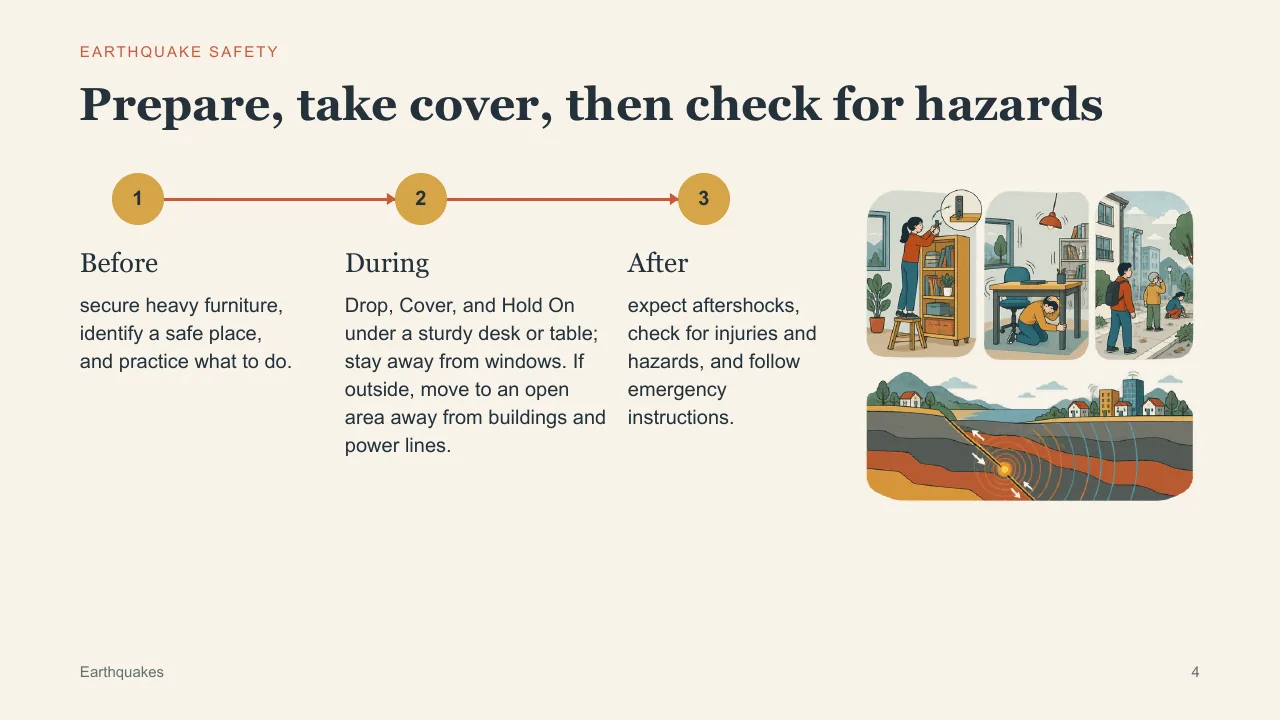
Prepare, take cover, then check for hazards
Before: secure heavy furniture, identify a safe place, and practice what to do.
Drop, Cover, and Hold On under a sturdy desk or table; stay away from windows. If outside, move to an open area away from buildings and power lines.
After: expect aftershocks, check for injuries and hazards, and follow emergency instructions.
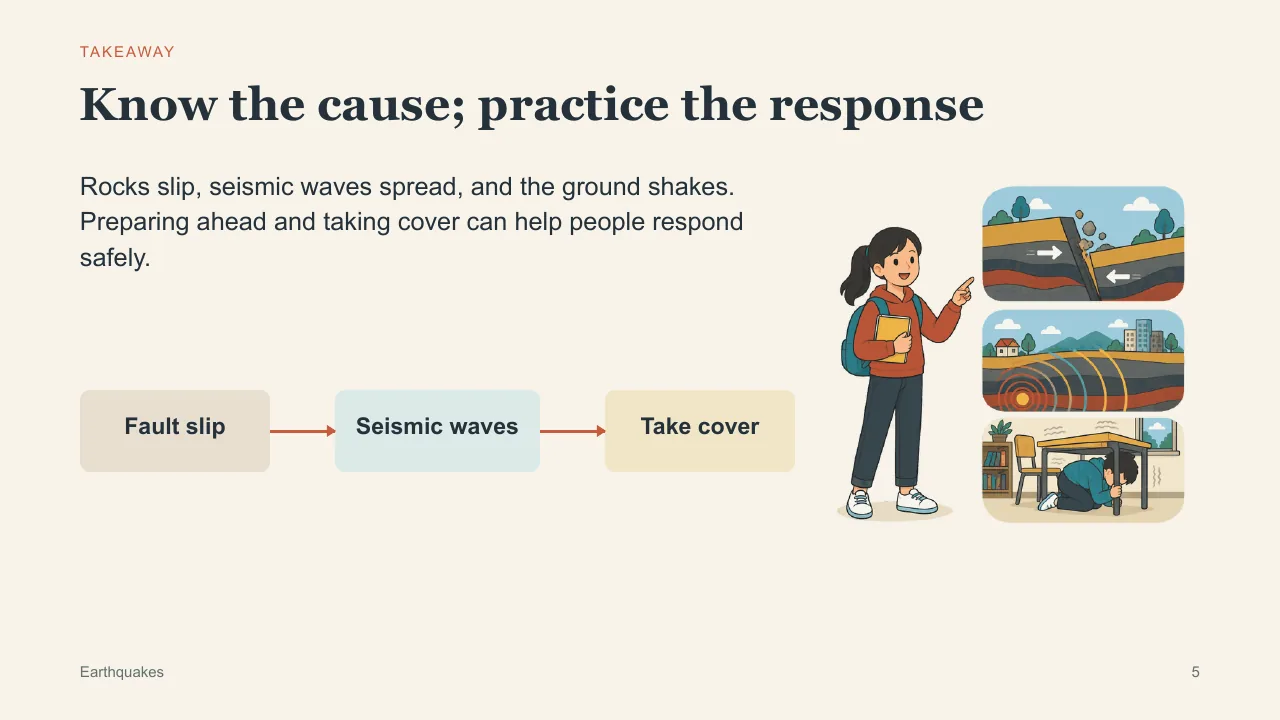
Know the cause; practice the response
Rocks slip, seismic waves spread, and the ground shakes. Preparing ahead and taking cover can help people respond safely.
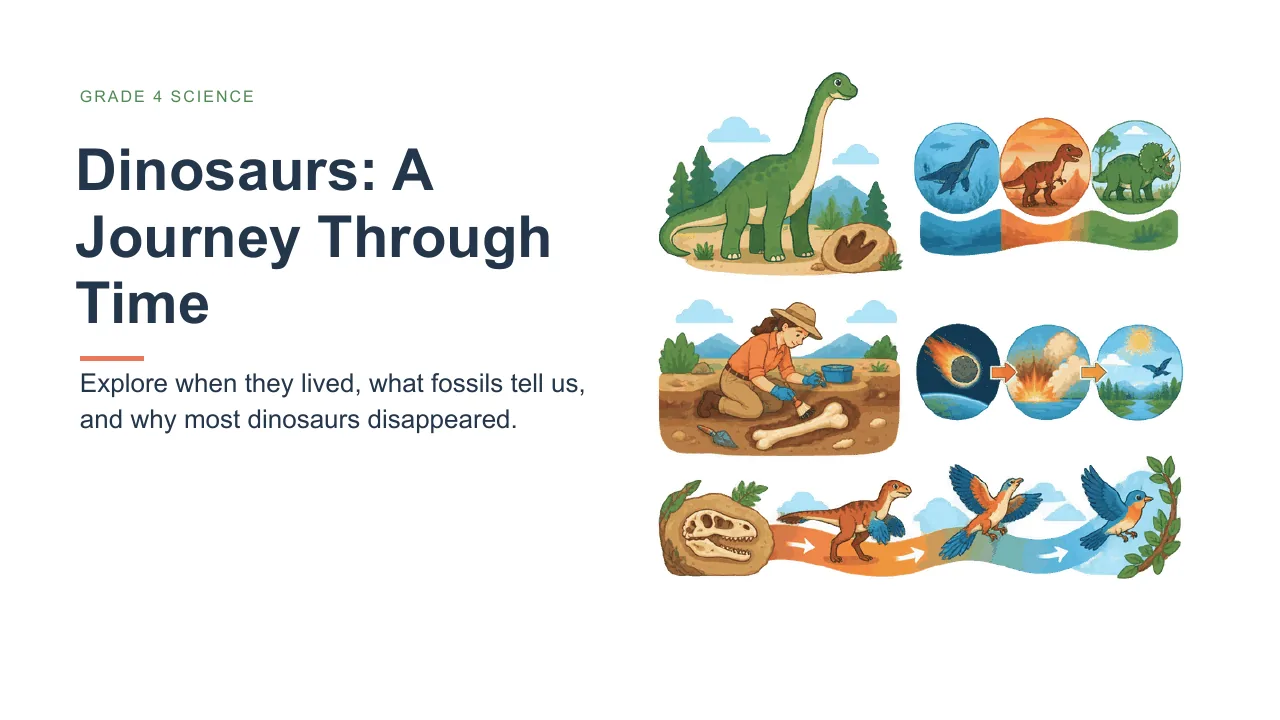 Dinosaurs
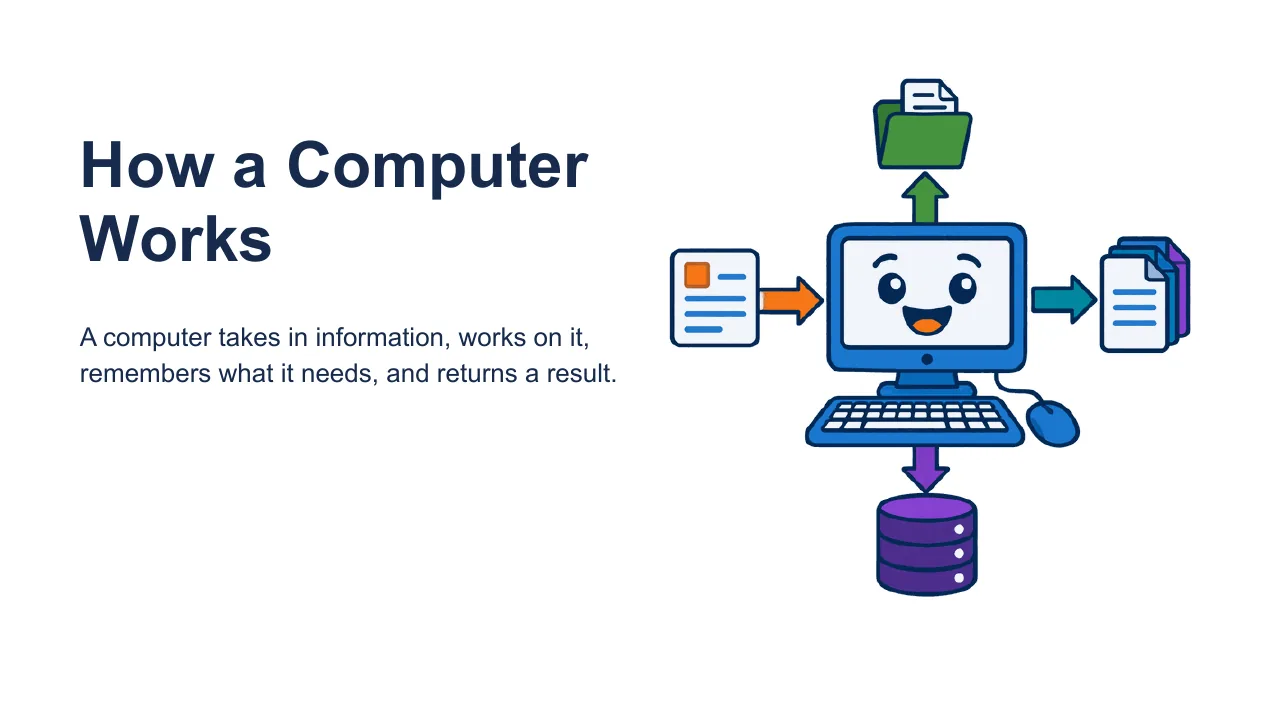 How a computer works
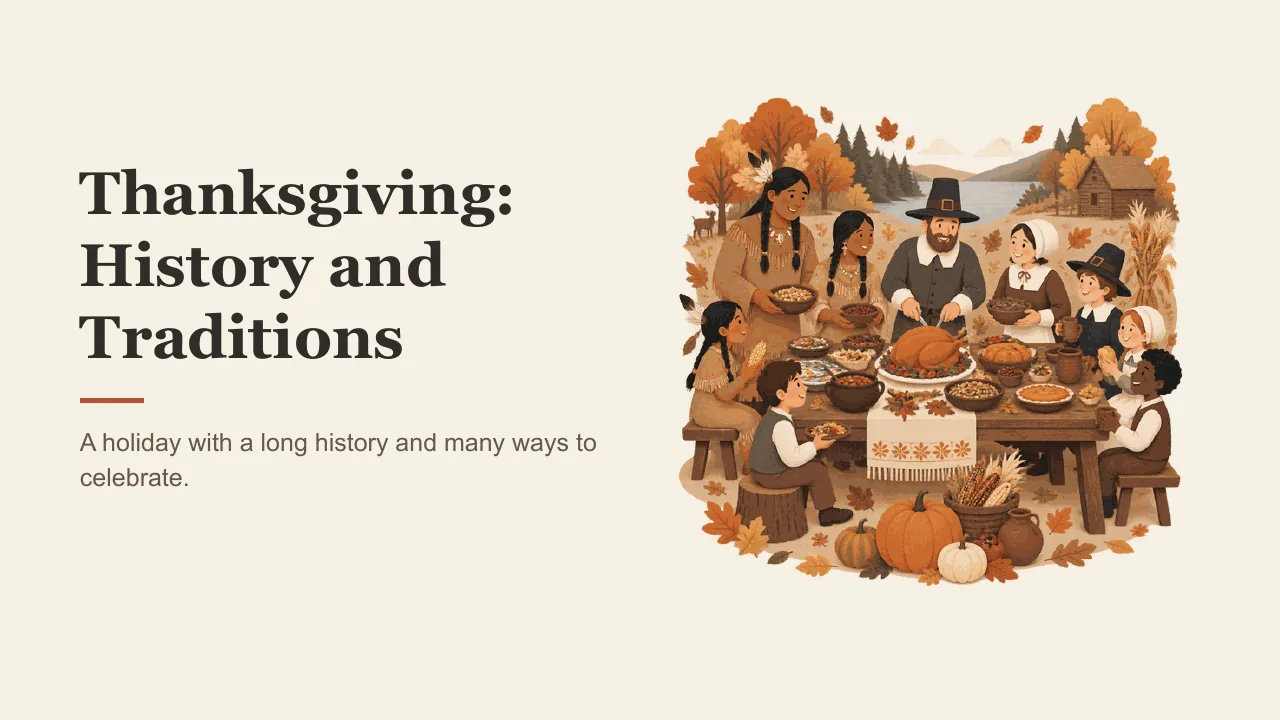 Thanksgiving