 IntoSlides
Presentation example
Recycling: a five-slide presentation
IntoSlides made this deck from one topic: “Recycling: what happens to paper, plastic, glass and metal after the bin, for a school assembly”. Below are all five slides with their text. Download the PowerPoint or make a presentation on your own topic.
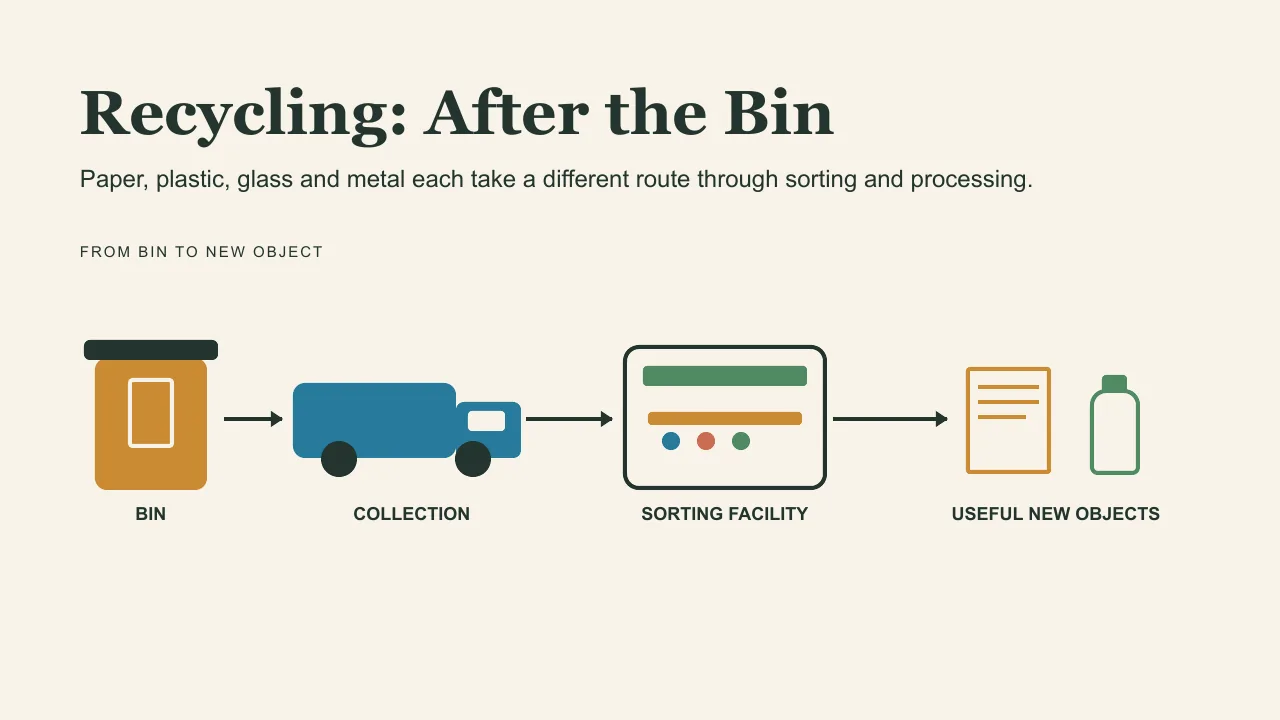
Recycling: After the Bin
Paper, plastic, glass and metal each take a different route through sorting and processing.
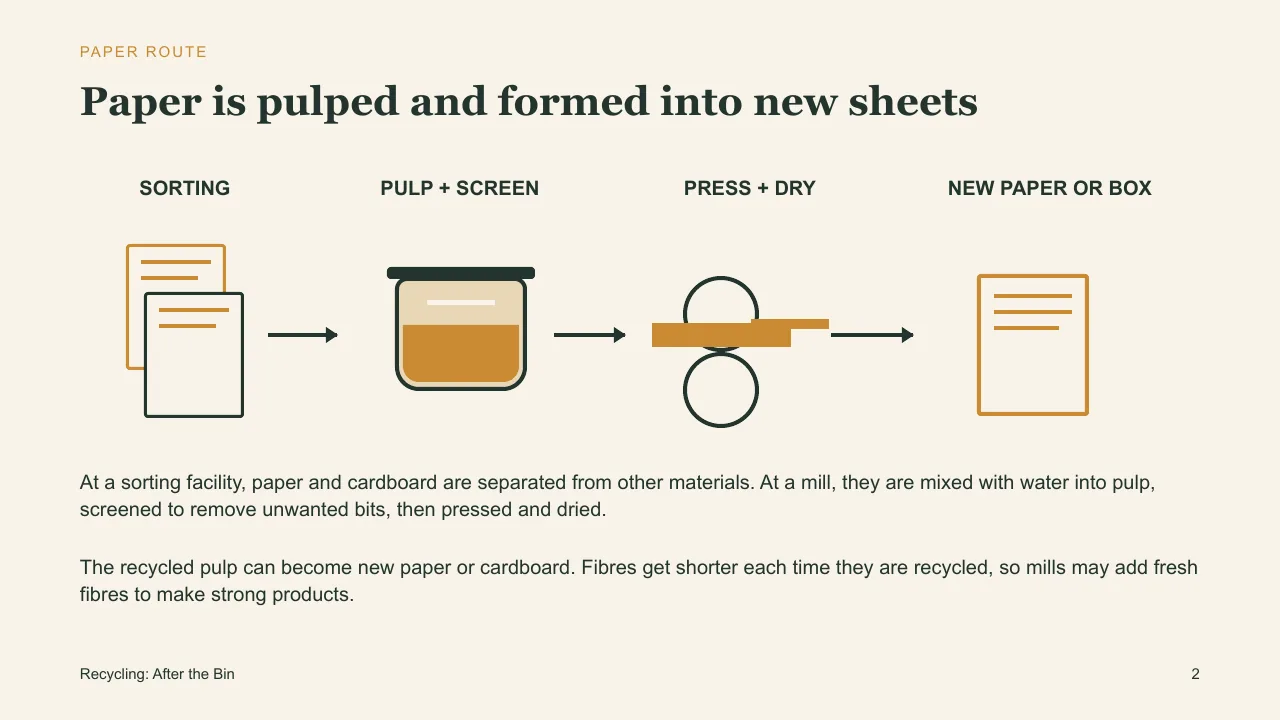
Paper is pulped and formed into new sheets
At a sorting facility, paper and cardboard are separated from other materials. At a mill, they are mixed with water into pulp, screened to remove unwanted bits, then pressed and dried.
The recycled pulp can become new paper or cardboard. Fibres get shorter each time they are recycled, so mills may add fresh fibres to make strong products.
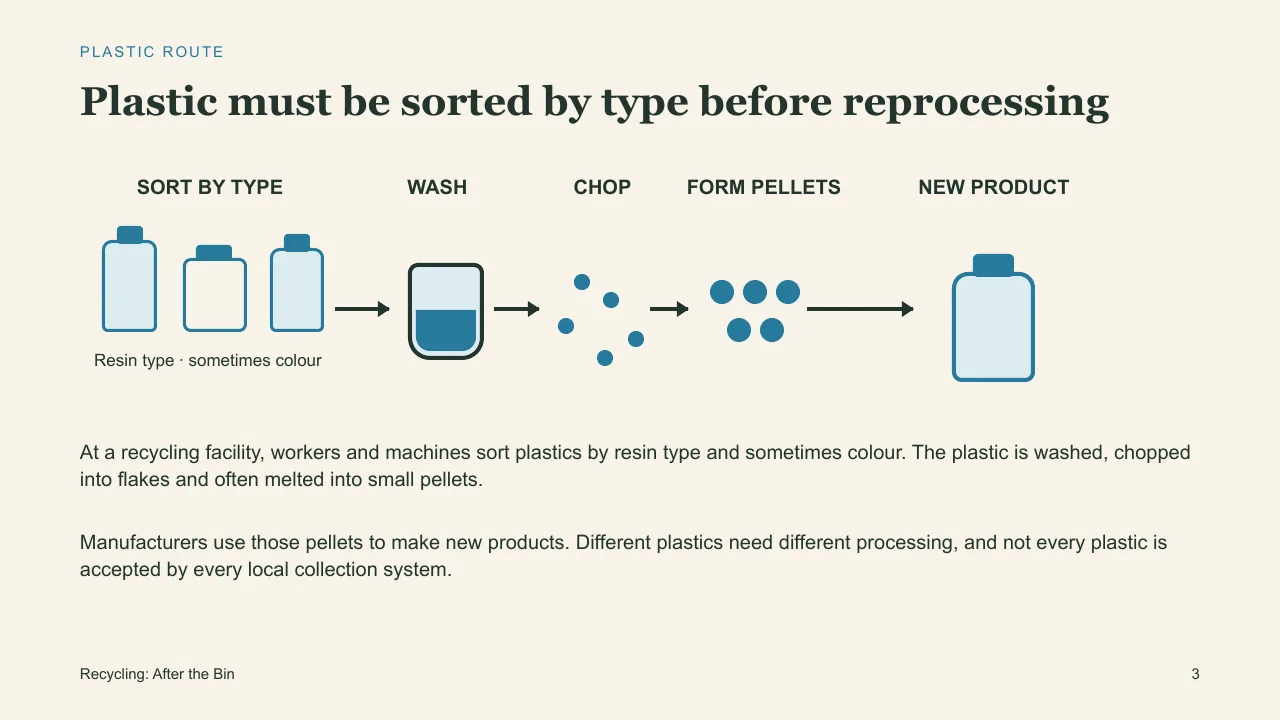
Plastic must be sorted by type before reprocessing
At a recycling facility, workers and machines sort plastics by resin type and sometimes colour. The plastic is washed, chopped into flakes and often melted into small pellets.
Manufacturers use those pellets to make new products. Different plastics need different processing, and not every plastic is accepted by every local collection system.
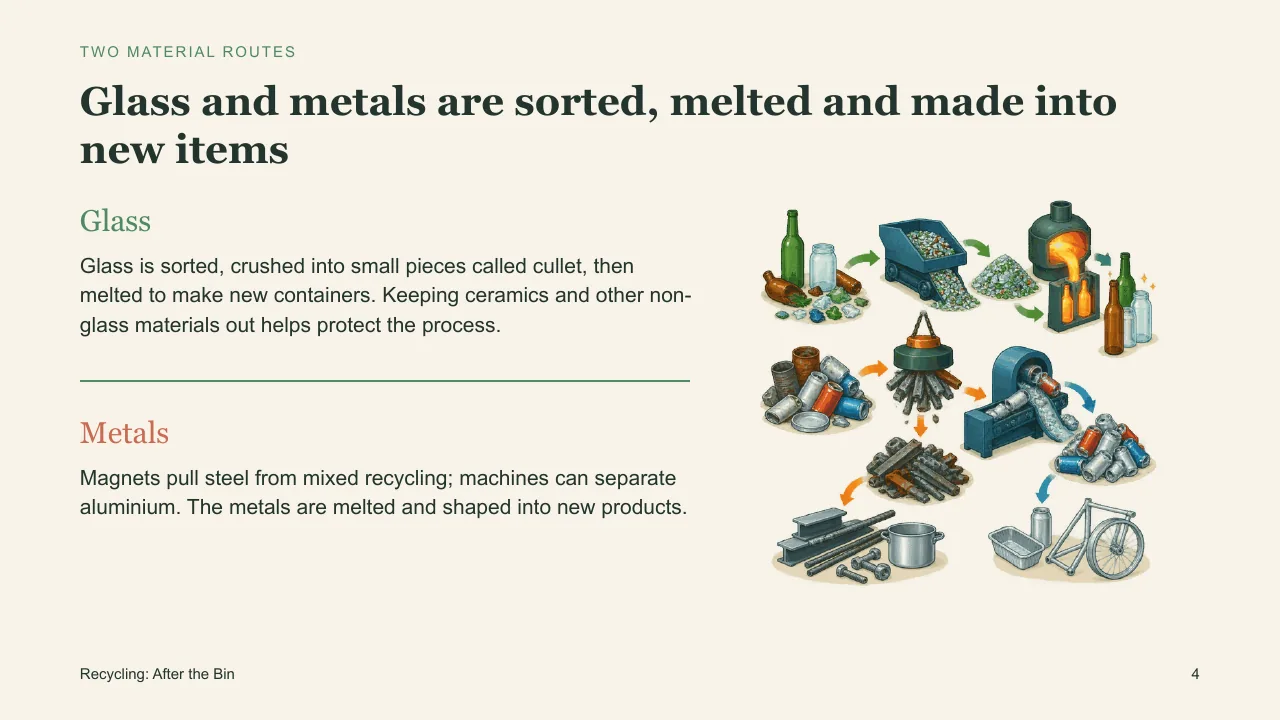
Glass and metals are sorted, melted and made into new items
Glass is sorted, crushed into small pieces called cullet, then melted to make new containers. Keeping ceramics and other non-glass materials out helps protect the process.
Magnets pull steel from mixed recycling; machines can separate aluminium. The metals are melted and shaped into new products.
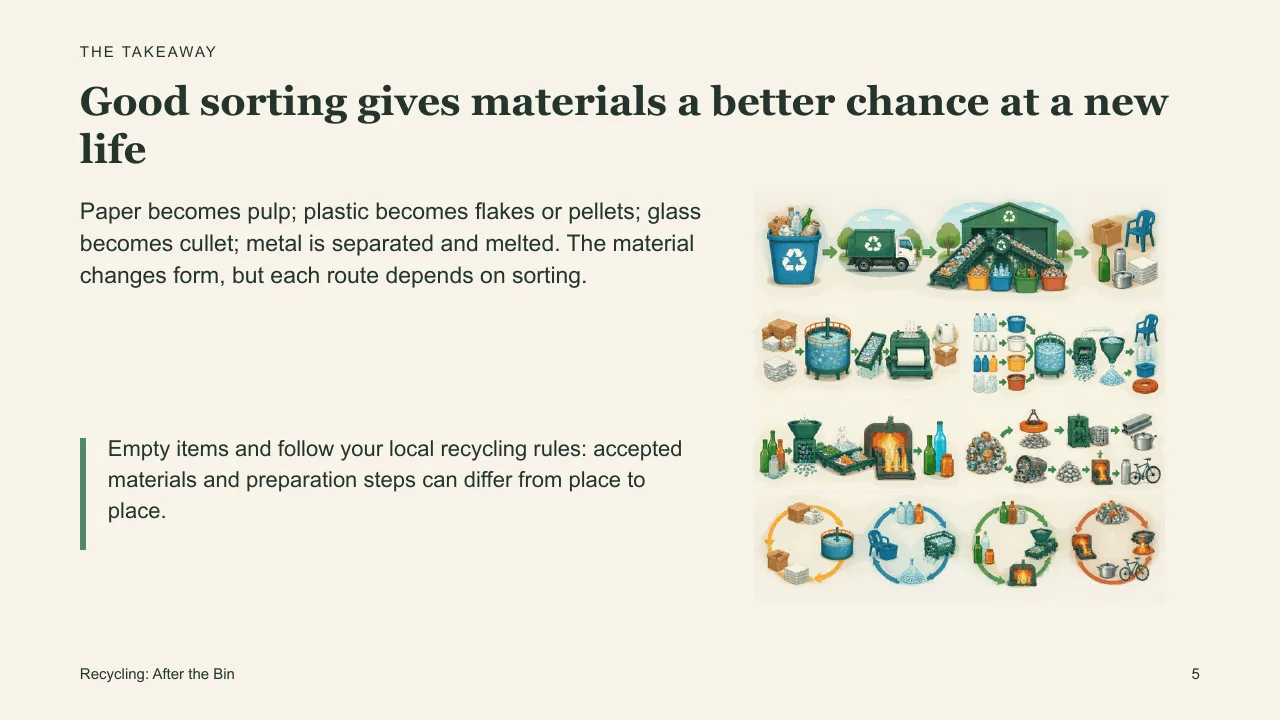
Good sorting gives materials a better chance at a new life
Paper becomes pulp; plastic becomes flakes or pellets; glass becomes cullet; metal is separated and melted. The material changes form, but each route depends on sorting.
Empty items and follow your local recycling rules: accepted materials and preparation steps can differ from place to place.
 Healthy eating
 Internet safety
 Photosynthesis