 IntoSlides
Presentation example
Renewable energy: a five-slide presentation
IntoSlides made this deck from one topic: “Renewable energy: solar, wind and water power compared with fossil fuels, for a middle school science class”. Below are all five slides with their text. Download the PowerPoint or make a presentation on your own topic.
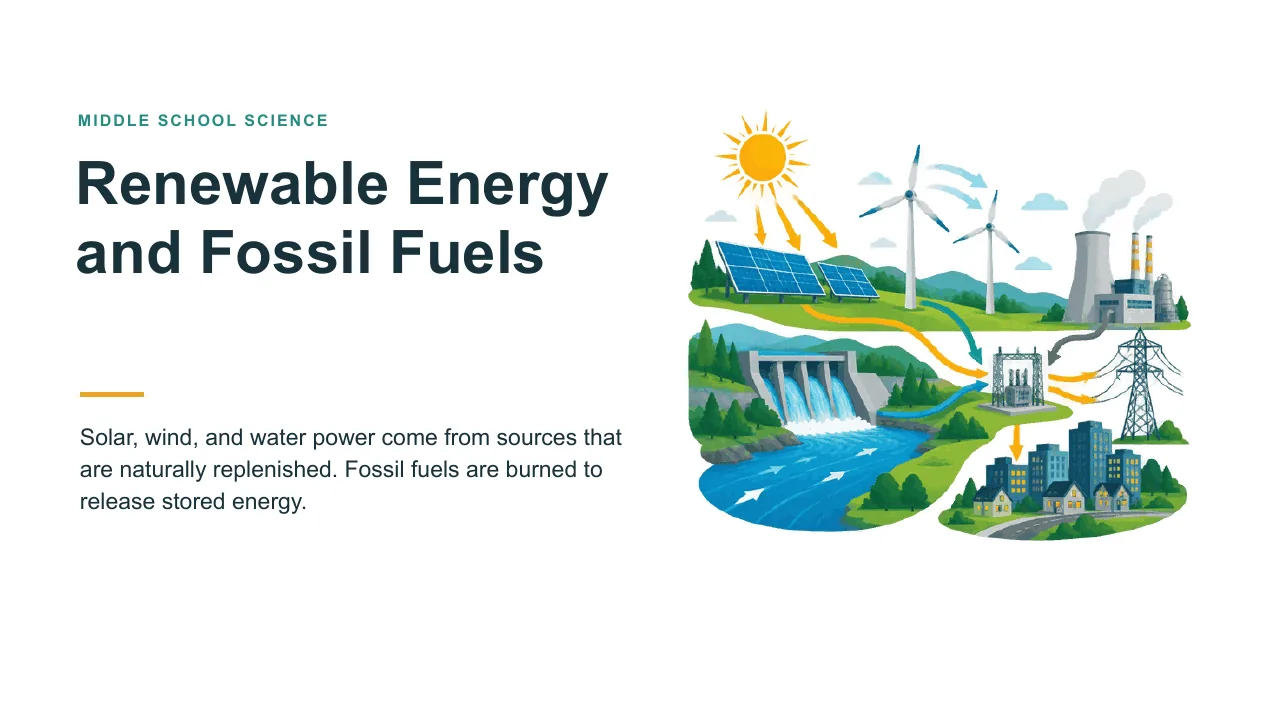
Renewable Energy and Fossil Fuels
Solar, wind, and water power come from sources that are naturally replenished. Fossil fuels are burned to release stored energy.
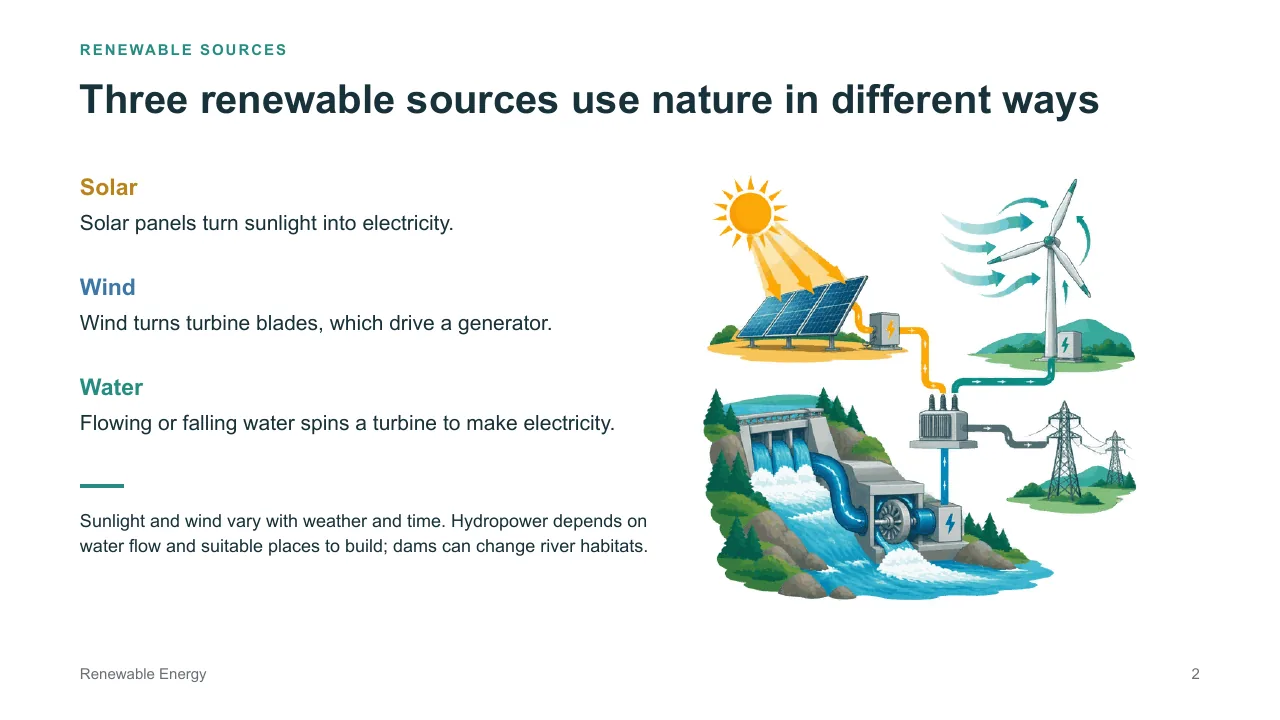
Three renewable sources use nature in different ways
Solar panels turn sunlight into electricity.
Wind turns turbine blades, which drive a generator.
Flowing or falling water spins a turbine to make electricity.
Sunlight and wind vary with weather and time. Hydropower depends on water flow and suitable places to build; dams can change river habitats.
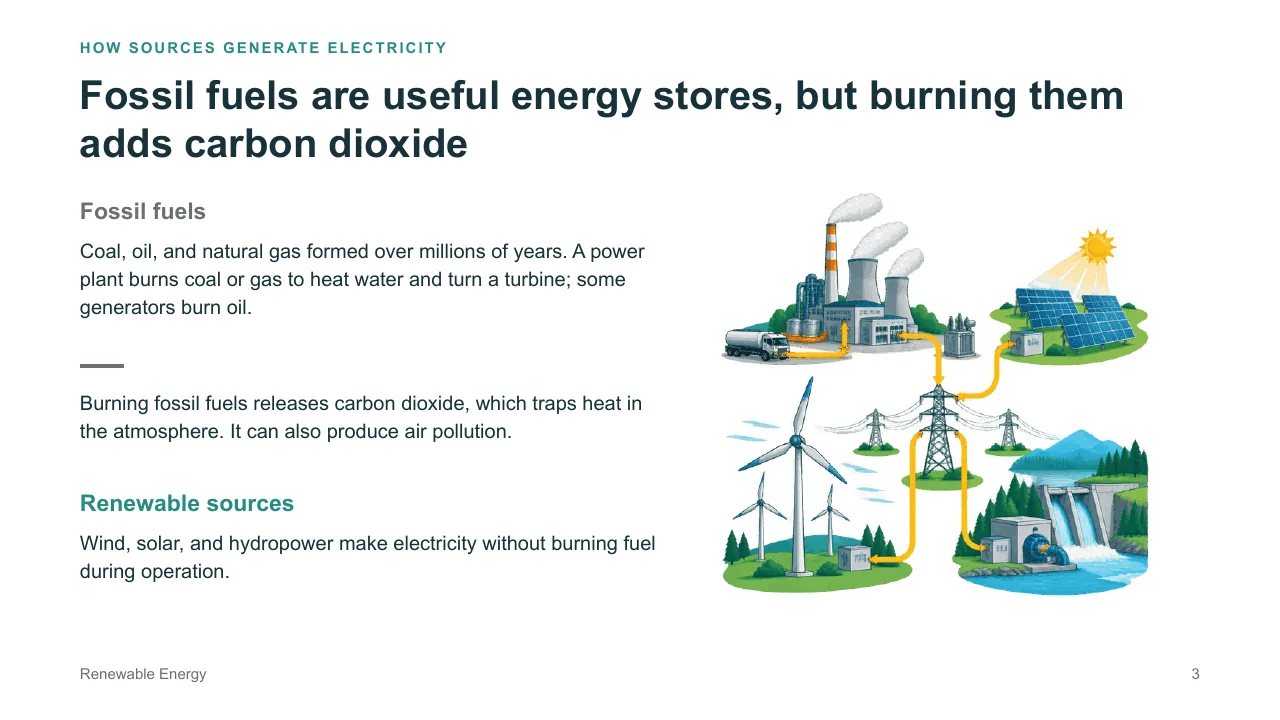
Fossil fuels are useful energy stores, but burning them adds carbon dioxide
Coal, oil, and natural gas formed over millions of years. A power plant burns coal or gas to heat water and turn a turbine; some generators burn oil.
Burning fossil fuels releases carbon dioxide, which traps heat in the atmosphere. It can also produce air pollution.
Wind, solar, and hydropower make electricity without burning fuel during operation.
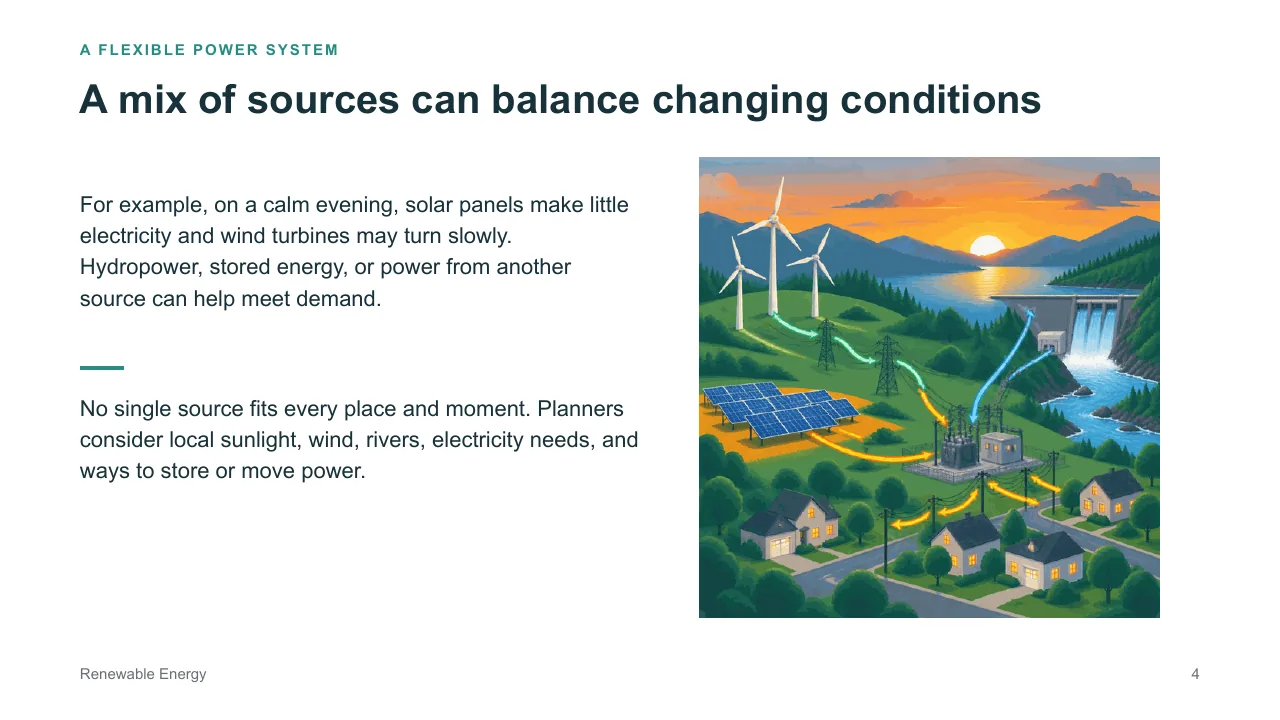
A mix of sources can balance changing conditions
For example, on a calm evening, solar panels make little electricity and wind turbines may turn slowly. Hydropower, stored energy, or power from another source can help meet demand.
No single source fits every place and moment. Planners consider local sunlight, wind, rivers, electricity needs, and ways to store or move power.
Use clean energy where it works, and plan for dependable power
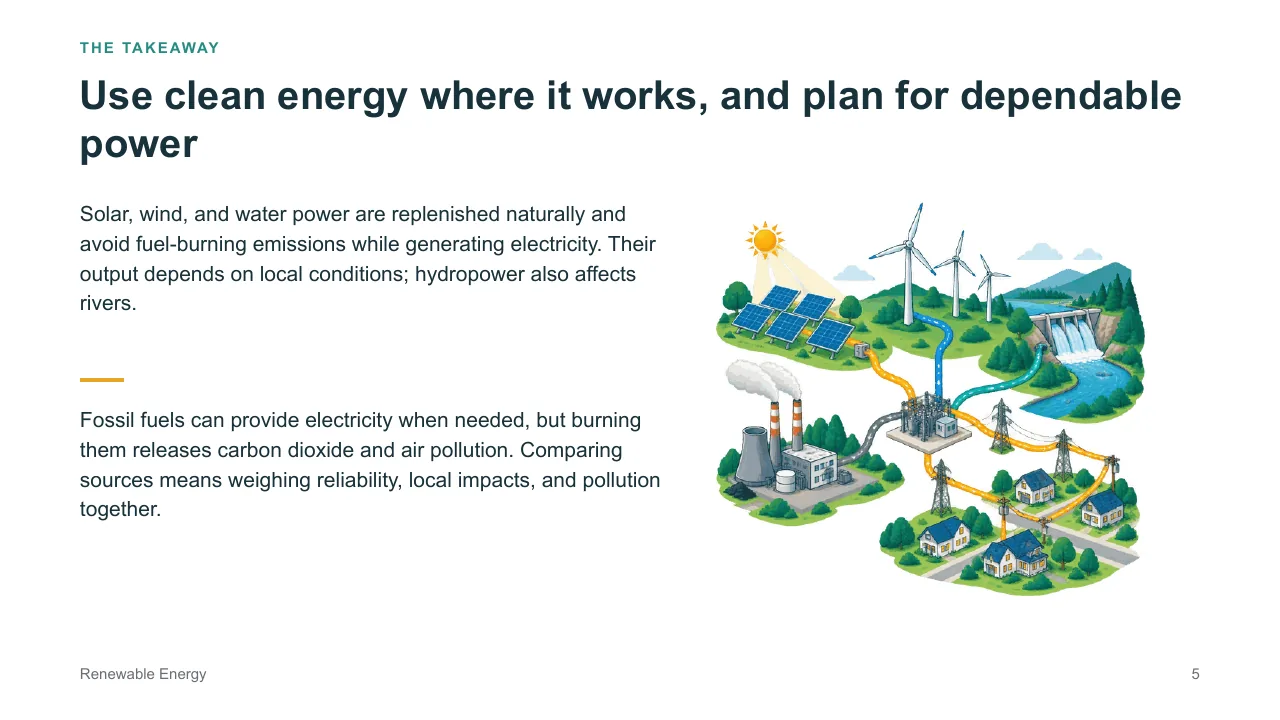
Solar, wind, and water power are replenished naturally and avoid fuel-burning emissions while generating electricity. Their output depends on local conditions; hydropower also affects rivers.
Fossil fuels can provide electricity when needed, but burning them releases carbon dioxide and air pollution. Comparing sources means weighing reliability, local impacts, and pollution together.
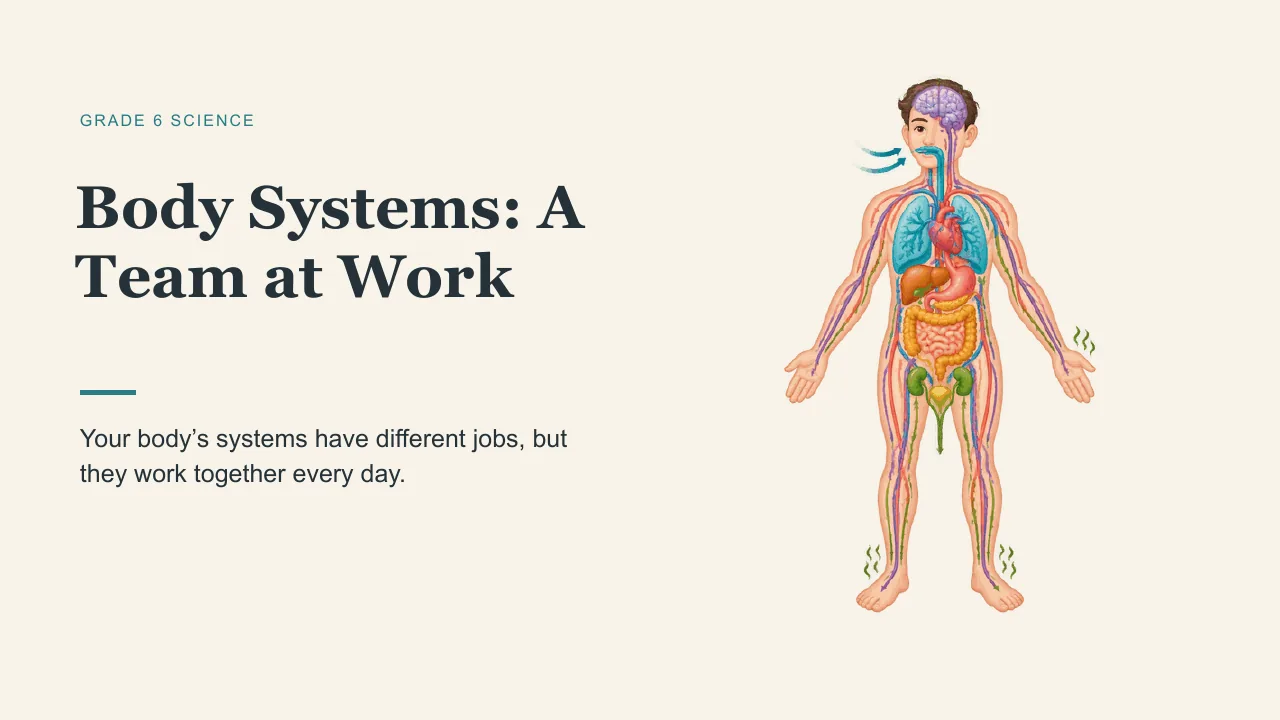 Human body systems
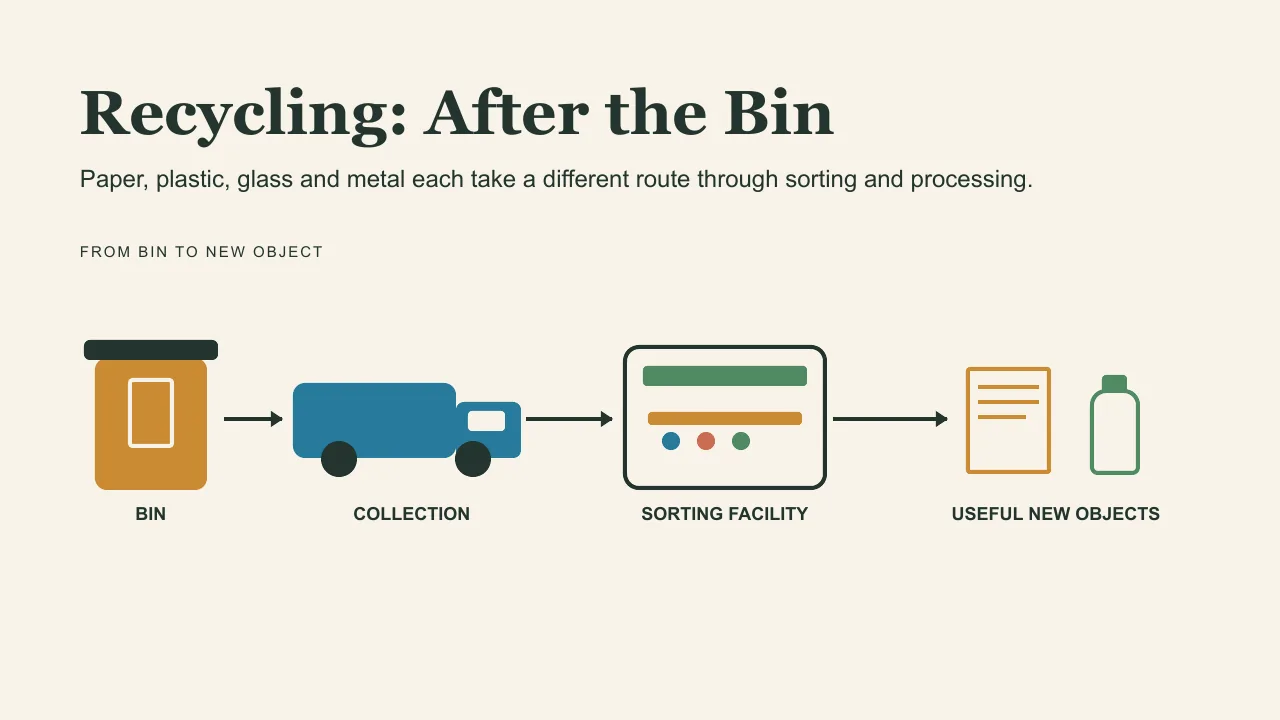 Recycling
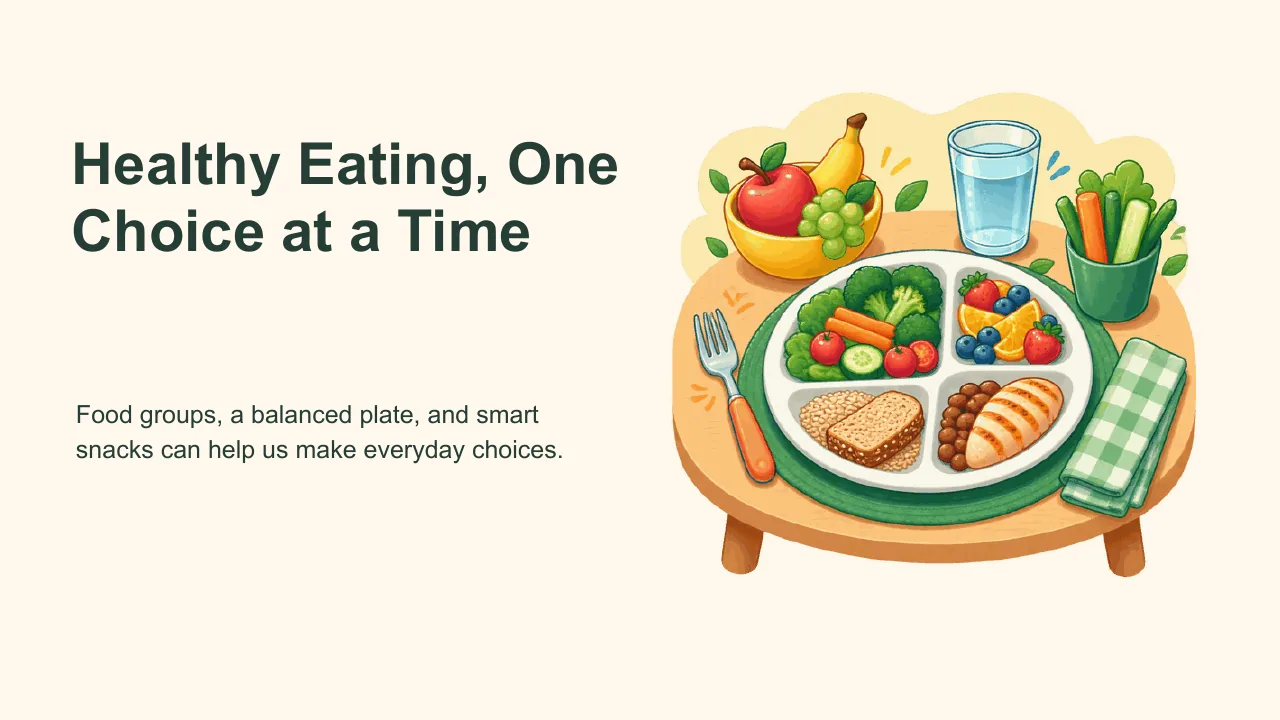 Healthy eating