 IntoSlides
Presentation example
Ocean pollution: a five-slide presentation
IntoSlides made this deck from one topic: “Ocean pollution: where plastic in the sea comes from and how it harms marine life, for a middle school science class”. Below are all five slides with their text. Download the PowerPoint or make a presentation on your own topic.
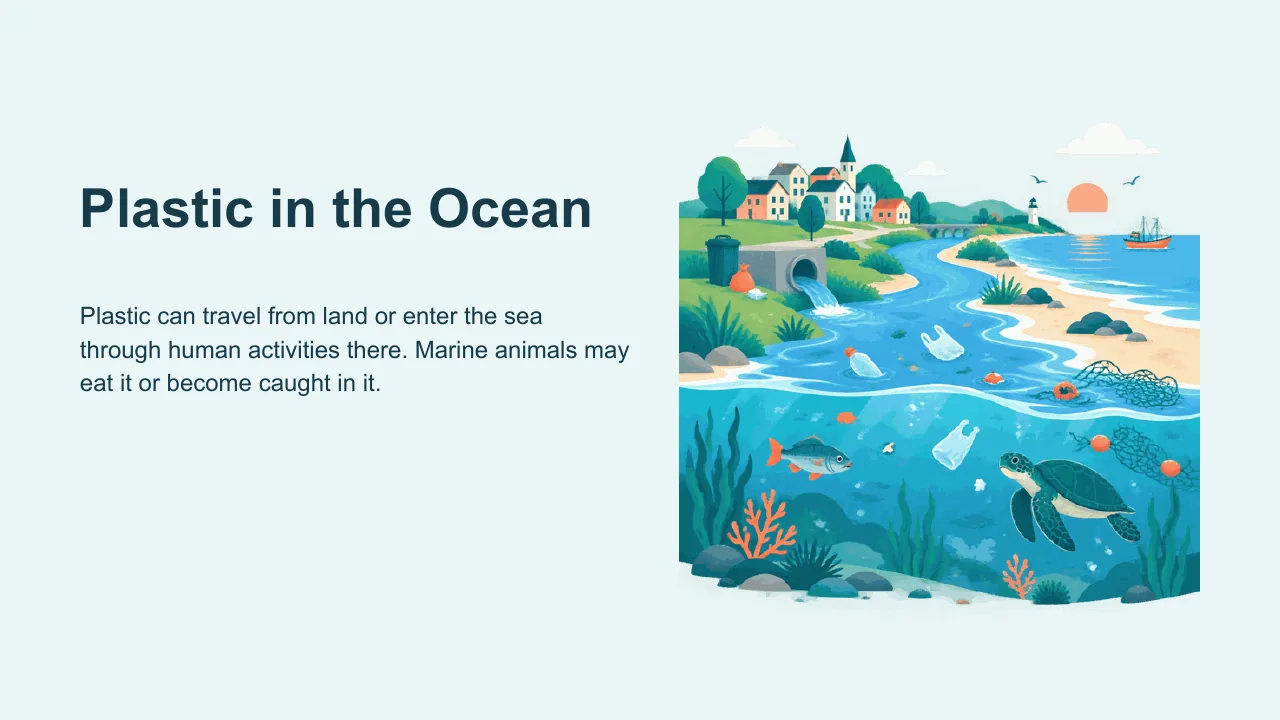
Plastic in the Ocean
Plastic can travel from land or enter the sea through human activities there. Marine animals may eat it or become caught in it.
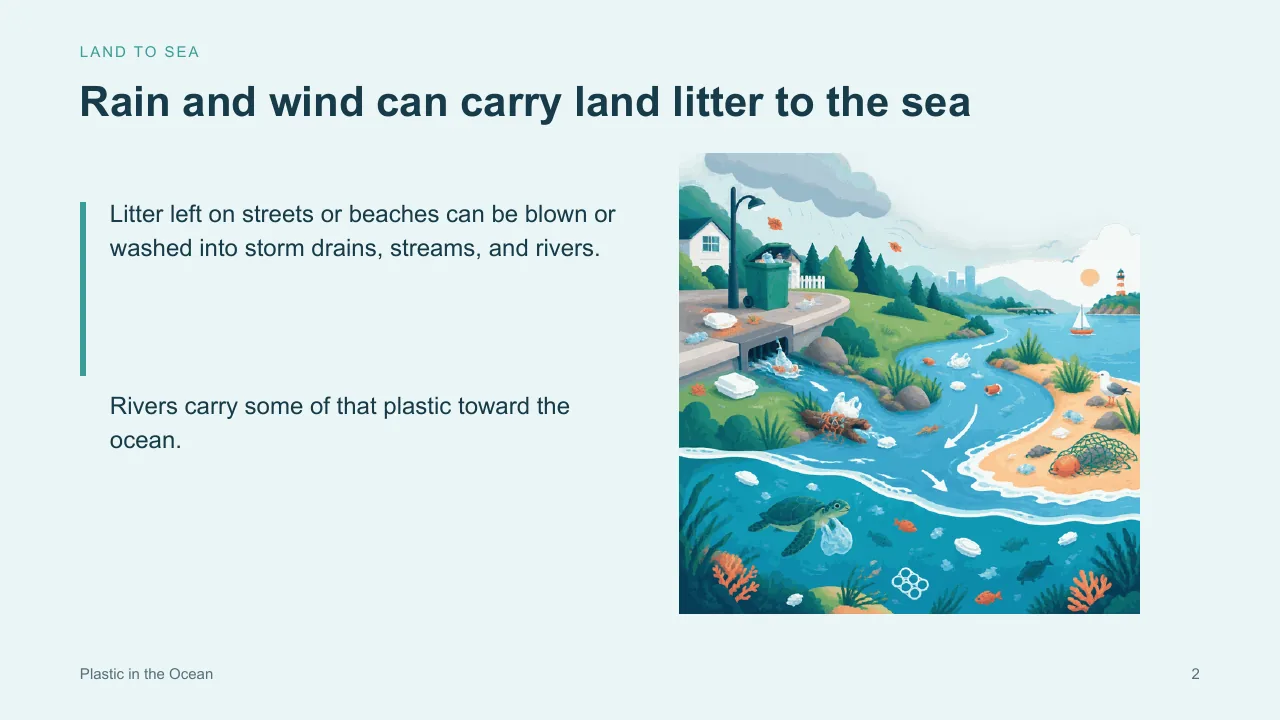
Rain and wind can carry land litter to the sea
Litter left on streets or beaches can be blown or washed into storm drains, streams, and rivers.
Rivers carry some of that plastic toward the ocean.
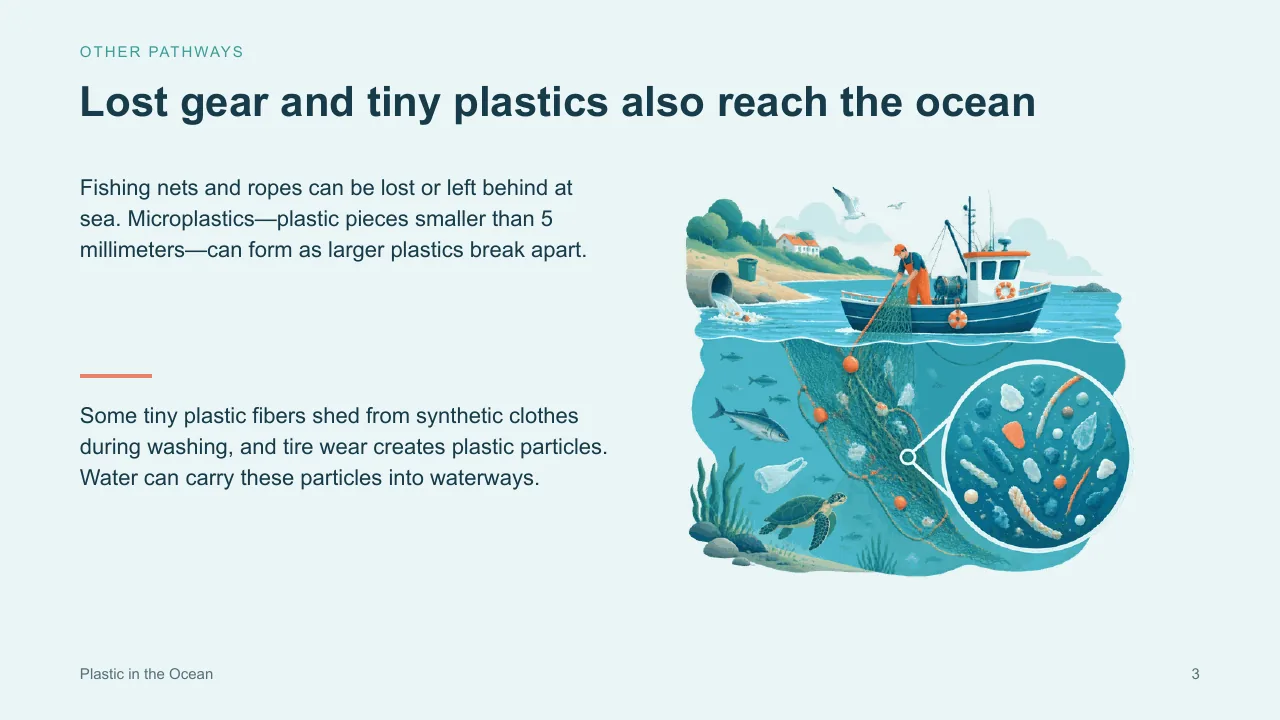
Lost gear and tiny plastics also reach the ocean
Fishing nets and ropes can be lost or left behind at sea. Microplastics—plastic pieces smaller than 5 millimeters—can form as larger plastics break apart.
Some tiny plastic fibers shed from synthetic clothes during washing, and tire wear creates plastic particles. Water can carry these particles into waterways.
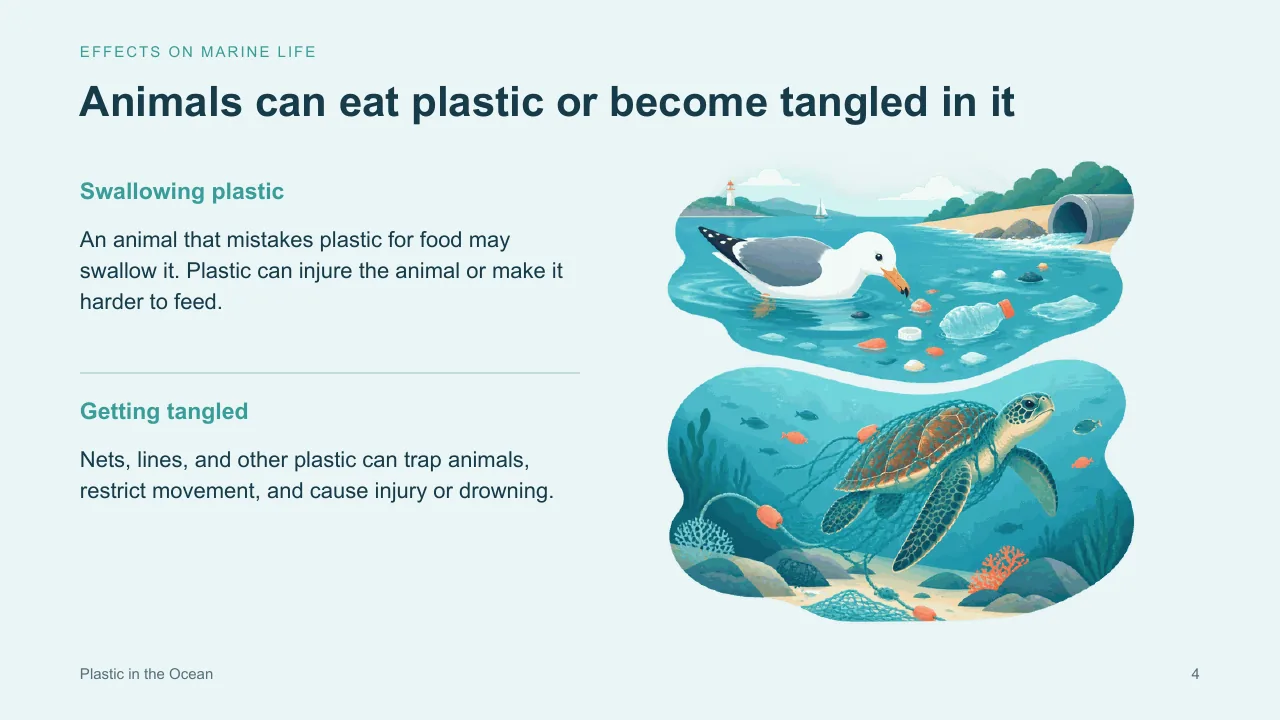
Animals can eat plastic or become tangled in it
An animal that mistakes plastic for food may swallow it. Plastic can injure the animal or make it harder to feed.
Nets, lines, and other plastic can trap animals, restrict movement, and cause injury or drowning.
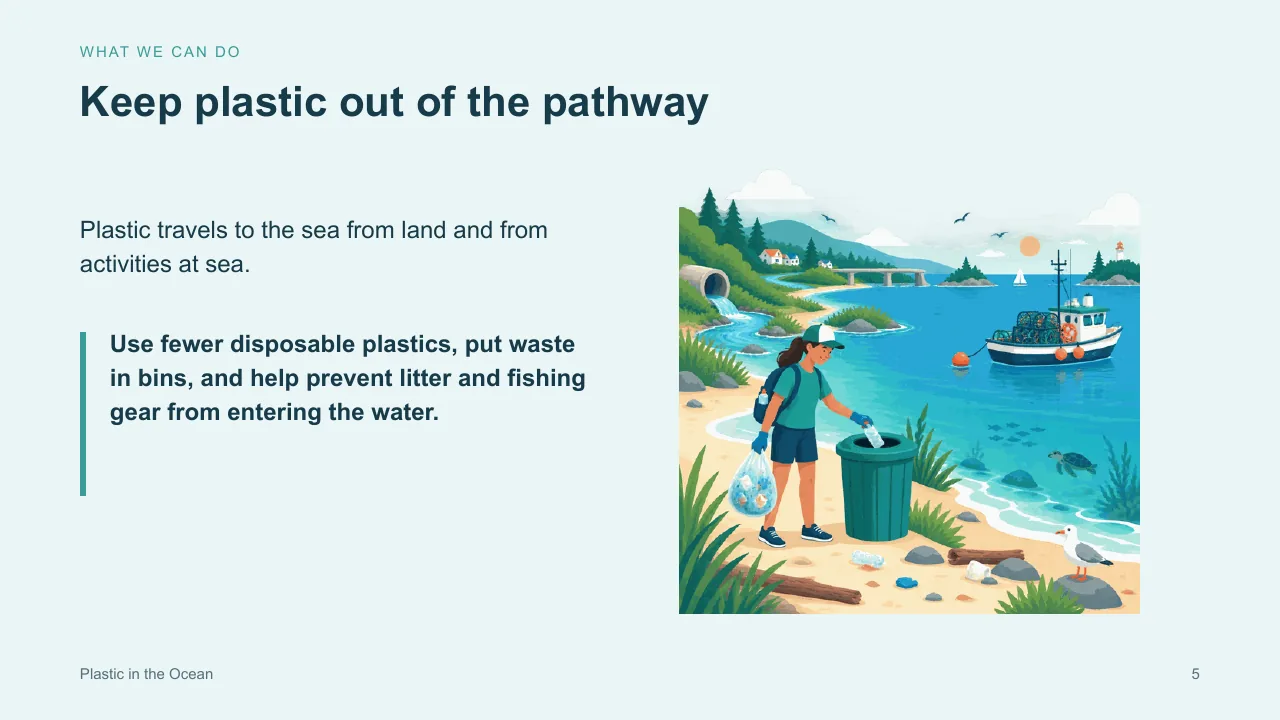
Keep plastic out of the pathway
Plastic travels to the sea from land and from activities at sea.
Use fewer disposable plastics, put waste in bins, and help prevent litter and fishing gear from entering the water.
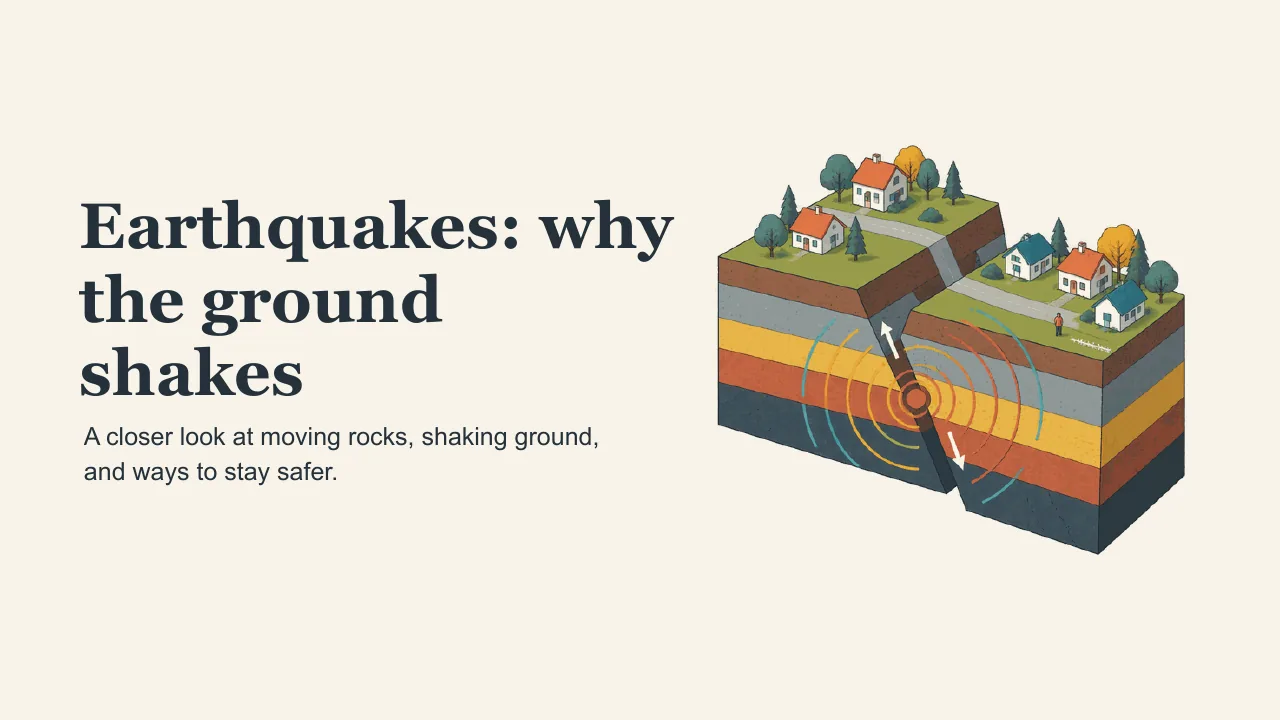 Earthquakes
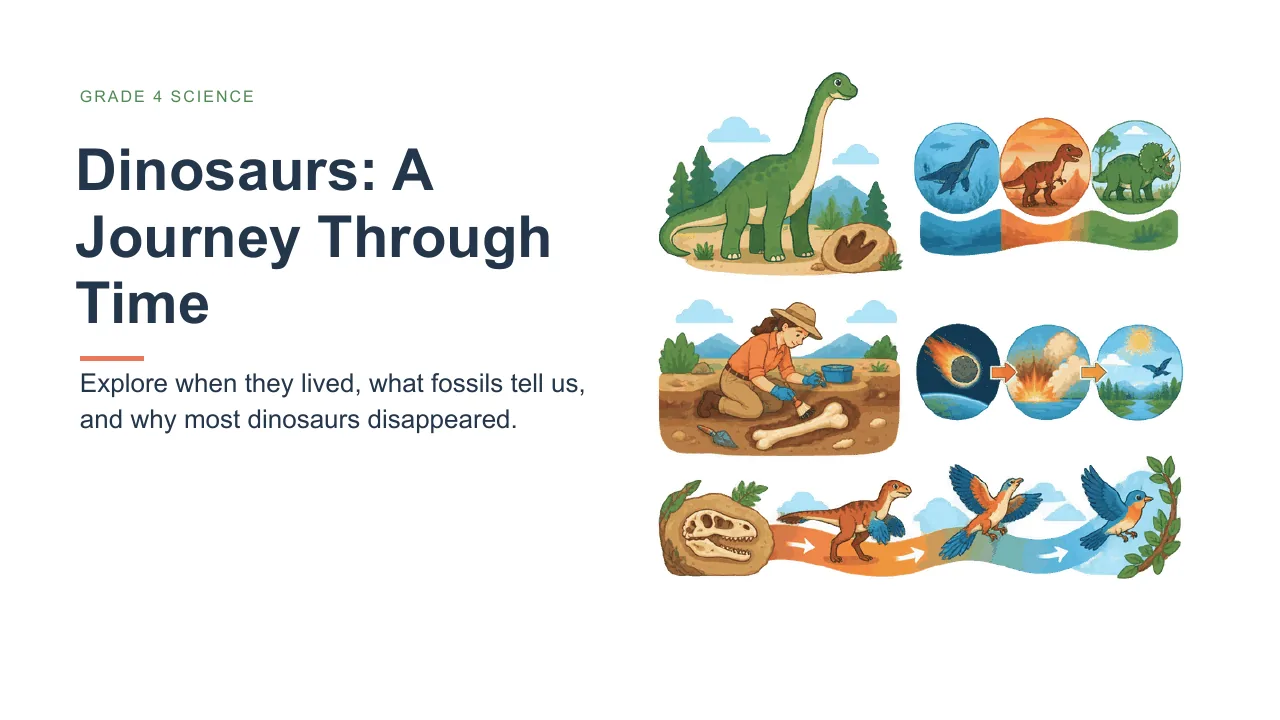 Dinosaurs
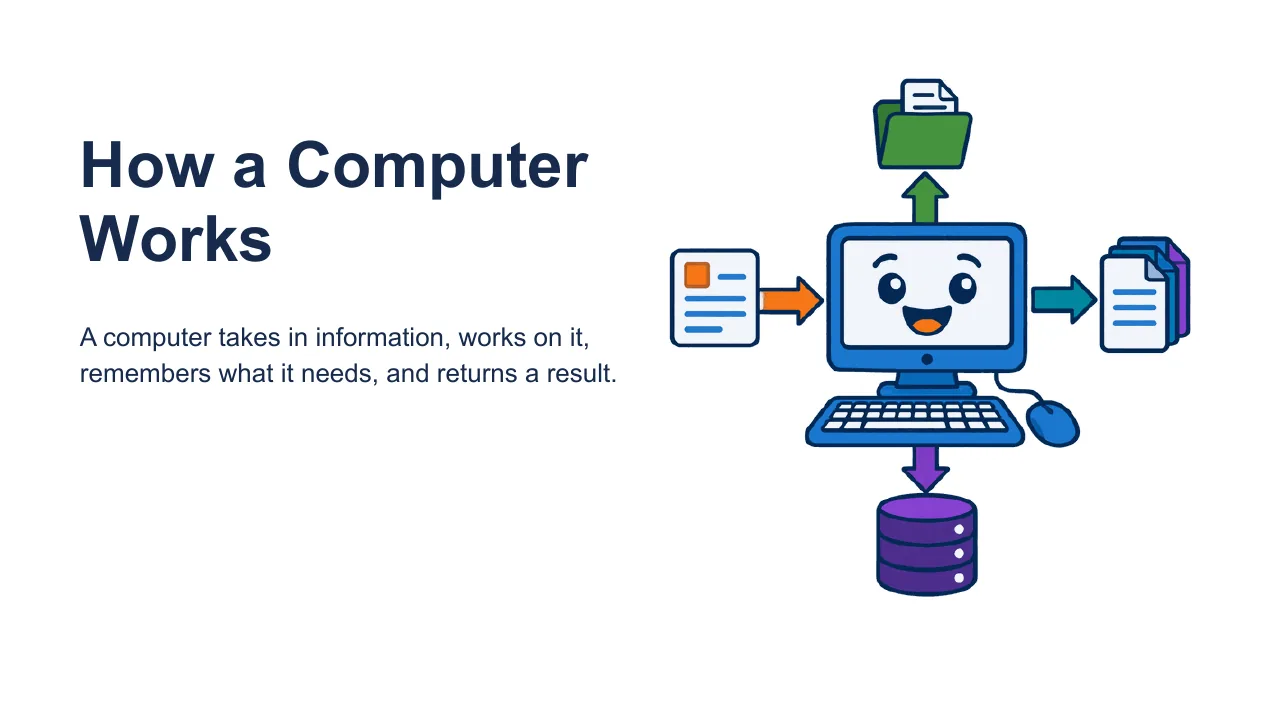 How a computer works